


info@kps.com.vn
+84 903 709 019
In modern building security, Intercom is not simply a communication device. In reality, when you search for “Intercom”, what you truly need is an access management solution.
If you make the wrong choice from the consulting stage, the system will become an operational burden within just 1–2 years. Below is a roadmap to help you choose the right Intercom system optimized for each specific model.
Many investors make the mistake of applying a residential system to apartment buildings, or using consumer-grade devices in industrial environments. Each environment requires a different Intercom system.
If you are facing these situations:
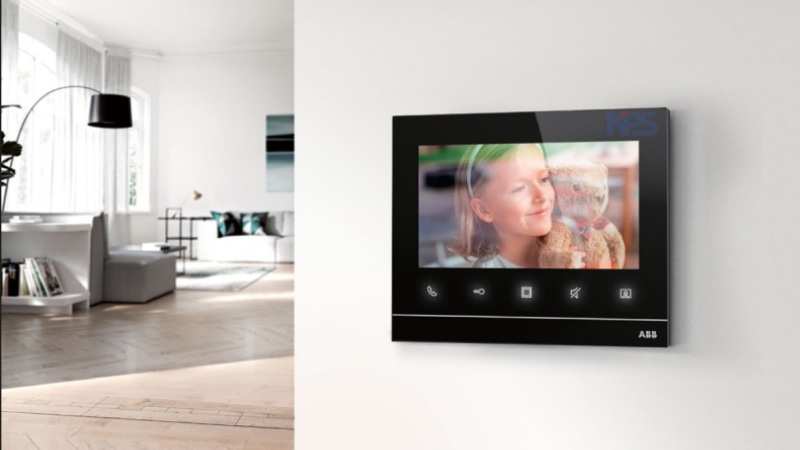
Optimal solution: Video Intercom + App + Smart Lock
How the system works (in practice)
When a visitor presses the doorbell, the image appears on your phone or monitor. You can talk directly and unlock the door remotely if needed.
When you are away:
Real challenge: In office and coworking environments, the issue is not communication, but control & experience:
As the scale grows, this model quickly becomes inefficient and unprofessional.
Optimal solution: IP Intercom + Access Control → Unified on one platform
How the system works (in practice)
For employees:
For visitors:
For management:
Real challenge: At this scale, the problem is no longer “whether to use intercom”, but:
In real operations, this becomes the biggest bottleneck of the entire building.
Optimal solution: Multi-tenant Video Intercom + IP Intercom + Access Control → Fully integrated and managed on a centralized platform
Real challenge: In industrial environments, the issue is not just communication - it is response time & safety.
In many cases, a delay of just a few minutes can lead to serious damage.
Optimal solution: Industrial IP Intercom + Emergency Intercom
All connected into a unified communication & security system
Many hesitate due to the cost of IP systems, but in reality, traditional analog systems are becoming obsolete due to their limitations.
You should choose IP Intercom if:
Common scenario: Choosing cheaper devices to reduce initial cost without considering integration or scalability
Consequences: Low-cost systems often suffer from lag, poor audio quality after a short time, and lack of replacement parts
Common scenario:
When expanding:
This is the biggest mistake for:
Common scenario:
Each operates independently
Consequences:
This is why many businesses later switch to integrated platforms like Genetec.
With 16 years of experience in integrated safety and security solutions, KPS provides systems from:
KPS is also a partner of leading global brands such as: Simplex (Johnson Controls), MAG, Kumahira, Tycon, GST, Janus Fire,... With a diverse product portfolio and strong partnerships, KPS delivers solutions that balance technical performance and investment cost.
Proven track record
A clear demonstration of KPS’s capability and credibility.
KPS is committed to providing customers with:
KPS - Your reliable security and safety solution partner for all construction projects.

Other news

Signify and KPS sign strategic partnership agreement.
Signify and KPS have signed a strategic partnership to promote smart, energy-efficient lighting solutions for buildings in Vietnam.
View detail

From APEC 2017 Da Nang to APEC 2027 Phu Quoc: From traditional security solutions to smart IOCs.
From APEC 2017 security monitoring solutions to a smart IOC model for APEC 2027 in Phu Quoc.
View detail

Team Building KPS 2026 | Da Nang - Hoi An - Hue
KPS 2026 Team Building journey in Da Nang - Hoi An - Hue, where teams bond, recharge, and spread sustainable values.
View detail

Optimizing air conditioning based on room conditions in hotels and resorts.
Why do 20-30% of hotel rooms still have their air conditioning running even when there are no guests?
View detail

Energy-saving solutions for hotels and resorts - without compromising the experience.
Consulting and implementing EMS systems for hotels - reducing electricity costs, smarter operation - without compromising customer experience.
View detail

Energy Management System (EMS): Cost and Operation Optimization
EMS solutions help businesses monitor, analyze, and optimize energy in real time, saving 10-30% on electricity costs.
View detail
ABOUT KPS


Regulations and policies
Warranty and return policy Delivery, payment, and feedback Giấy phép kinh doanhContact Information
HO CHI MINH OFFICE
10–12 Dong Van Cong Street, Cat Lai Ward, Ho Chi Minh City.
+842839976099 / 903 709 019
info@kps.com.vn
www.kps.com.vn
Work time
Monday – Friday : 8:00 AM - 17:30 PM
Saturday - Sunday: Off
HA NOI OFFICE
22 Alley 168 Nguyen Xien, Khuong Dinh Ward, Hanoi City
+84 903 709 019
kpshn@kps.com.vn
www.kps.com.vn
Work time
Monday – Friday: 8:00 AM - 17:30 PM
Saturday - Sunday: Off
DA NANG OFFICE
490 Nguyen Tri Phuong, Hoa Cuong Ward, Da Nang City
+84 903 709 019
kpsdn@kps.com.vn
www.kps.com.vn
Work time
Monday – Friday: 8:00 AM - 17:30 PM
Saturday - Sunday: Off
CAN THO OFFICE
11/11 Tran Binh Trong, Ninh Kieu Ward, Ninh Kieu District, Can Tho City.
+84 090 709 019
kpsct@kps.com.vn
www.kps.com.vn
Work time
Monday – Friday: 8:00 AM - 17:30 PM
Saturday - Sunday: Off
SERVICE CENTER - WAREHOUSE
10–12 Dong Van Cong Street, Cat Lai Ward, Ho Chi Minh City.
+ 84 28 3997 0609
baohanh@kps.com.vn
www.kps.com.vn
Work time
Monday – Friday: 8:00 AM - 17:30 PM
Saturday - Sunday: Off
2010 © Bản quyền thuộc KPS
Online: 117 | Visitors Counter: 17348907
About | Recruitment | News | Contact Us


