


info@kps.com.vn
+84 903 709 019
In harsh environments such as seaports - where high humidity, salt vapor and fine dust always exist - choosing a surveillance camera does not stop at resolution or field of view. A vital factor is the ability to resist corrosion, ensuring the device operates durably against the effects of weather and marine chemicals. The article below will introduce Top 5 most reliable anti-corrosion cameras today, specially designed for coastal areas, riverside factories, or drilling rigs - helping you make the right choice for your security system.
Here are The top factor that determines the durability of the camera in harsh environments.
NEMA 4X Standard: This is a standard issued by the National Electrical Manufacturers Association (NEMA) of the United States, evaluating the protection ability of electrical equipment enclosures (such as surveillance cameras) in harsh outdoor conditions. NEMA 4X protects the camera from salt spray, air containing salt mist, dust, sea sand, sudden temperature changes, strong winds, heavy rain and high pressure water jets. This is especially important standards for cameras installed in coastal areas, seaports, islands or industrial zones near the sea.
IP (Ingress Protection) Standard: Indicates the level of protection against dust and water of electronic equipment. IPXY structure, in which X is the dustproof level (from 0-6) and Y is the waterproof level (from 0-9K).
IP66: Absolutely dustproof (level 6) and resistant to strong water jets from all directions.
IP67: Absolutely dustproof (level 6) and temporary immersion in water (1m - 30 minutes).
IP68: Better protection than IP67, allowing deeper and longer immersion in water.
IK10 standard: Evaluates the impact resistance of the device, ensuring the camera is not damaged by physical impact.
The camera housing material plays a role The core of corrosion resistance.
Stainless steel (Inox): Especially stainless steel 316L (also known as inox 316L) is the top choice thanks to its superior corrosion resistance, especially in salt and chemical environments. This material is less prone to discoloration and has high durability.
Epoxy or Anodized Aluminum Alloys: Aluminum is lightweight, durable, and corrosion resistant. Epoxy coatings or anodizing processes enhance resistance to oxidation and corrosion.
Specialty Composite Materials: Several advanced composite materials are also used to enhance corrosion resistance and durability for the camera.
Lens shield: Should have a nano coating that is waterproof and anti-corrosion to ensure that image quality is not affected.
Rubber gasket and seal: Helps prevent water and salt vapor from entering the camera.
Corrosive environments often come with temperature fluctuations and high humidity.
Wide operating temperature range: Ensures the camera can operate stably in both extreme hot and cold conditions (e.g. -40°C to 65°C).
High humidity resistance: The camera needs to be able to withstand humidity of up to 90% or more to prevent moisture from entering and damaging the electronic circuit.
Image Processing Technology: Ensures sharp, clear image quality even in low light or harsh environments. foggy, dusty environment. Technologies such as adaptive AGC, DDE, 3D DNR help enhance thermal image quality.
Explosion-Proof: For special industrial environments such as factories Chemical, oil and gas machinery, cameras need to meet additional explosion-proof standards to ensure absolute safety.
PTZ (Pan-Tilt-Zoom) function: Allows remote control of horizontal, vertical movement and zoom, helping to observe the whole scene and flexibly monitor details.
Integrated security system: Ability to connect and Integrate with other video surveillance and alarm systems to create a comprehensive security solution.
Lightning and overvoltage protection: Ensure the camera is not damaged by external electromagnetic factors.
Choosing reputable brands with experience in manufacturing specialized cameras for harsh environments will ensure quality and better warranty. Brands like i-PRO(Panasonic), Bosch, CNB are the names you can refer to.
Investing in a high-quality corrosion-resistant camera may cost more initially, but in the long run it will save you money on maintenance, replacement and ensure the monitoring system operates stably and effectively.
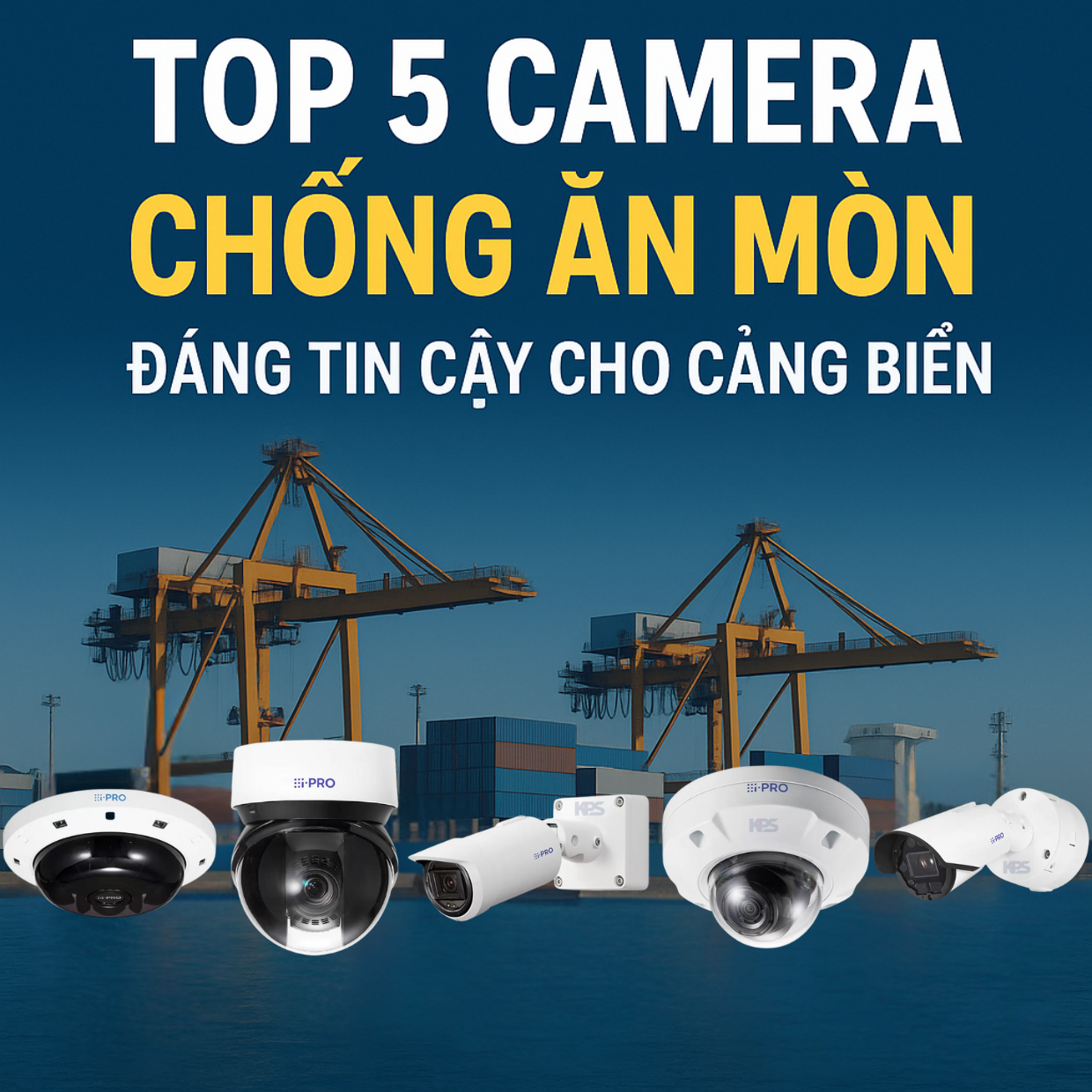
This is #1 choice for ruggedness on your list. The WV-S8564L is not only an omnidirectional camera with 360-degree viewing, but it is also built to handle extreme environments.
Why it's reliable:
Corrosion resistance: Meets NEMA 4X, the most important certification for marine environments because of its resistance to salt spray, dust, rain, wind and high pressure water jet.
Full protection: Meets IP67/IP66 (dustproof and strong water/temporary water immersion) and IK10 (50J impact resistance).
Durable materials: Die-cast aluminum main body, stainless steel external fixing screws (Corrosion-resistant treatment).
Anti-condensation: Integrated Temish element + moisture absorption gel helps prevent condensation inside.
Wide operating temperature: Stable operation from −40∘C to +60C.
This PTZ model is designed to monitor large areas and operate stably in harsh weather conditions.
Reason due to reliability:
Corrosion resistance: Meets NEMA 4X standards (protected against salt spray, dust, rain, wind and high-pressure water jets).
Comprehensive protection: Meets IP66 (protected against dust and high-pressure water jets) and IK10 ong> (shockproof).
Extremely wide operating temperature: From −50∘C to +60∘C, suitable for large temperature fluctuations.
Windproof: Withstands wind speeds of up to 40 m/s.
Powerful PTZ Features: 30x optical zoom and high pan speed (up to 700 degrees/second) allow for wide coverage and detailed monitoring.
For fixed surveillance points that require high resolution and good resistance, the WV-S15700-V2L is an excellent choice.
Reason due to reliability:
Corrosion resistance: Meets NEMA 4X standards (protected against salt spray, dust, rain, wind and high-pressure water jets).
Complete protection: Meets IP66 (protected against dust and high-pressure water jets) and IK10 (high impact resistance).
Wide operating temperature: From −40∘C to +60∘C.
Durable Materials: Die-cast aluminum enclosure and Stainless steel external screws (Corrosion-resistant treatment).
Night vision: Built-in powerful IR LED.
This dome camera provides a flexible surveillance solution with good resistance to outdoor environments, including seaports.
Reason due to reliability:
Corrosion resistance: Meets NEMA 4X standards (protected against salt spray, dust, rain, wind and high-pressure water jets).
Complete protection: Meets IP66 (protected against dust and high-pressure water jets) and IK10 (high impact resistance).
Wide operating temperature: From −40∘C to +60∘C.
Durable materials: Die-cast aluminum enclosure and steel external screws Corrosion-resistant treatment.
As a bullet camera with powerful optical zoom capabilities, the WV-S15501-Z3L is also designed to operate stably in outdoor environments.
Reason due to reliability:
Corrosion resistance: Meets NEMA 4X standards (protected against salt spray, dust, rain, wind and high-pressure water jets).
Complete protection: Meets IP66 (protected against dust and high-pressure water jets) and IK10 (high impact resistance).
Wide operating temperature: From −40∘C to +60∘C.
Durable Materials: Die-cast aluminum enclosure and Stainless steel external screws (Corrosion-resistant treatment).
Optical Zoom: 30x zoom capability enables detailed observation from a distance.
Proper deployment will lay a solid foundation for your system.
Assess the severity: Determine which areas are exposed to salt spray, waves, strong winds, and potential chemicals. Prioritize cameras with the highest corrosion resistance standards for these locations.
Optimal location: Install cameras in locations that have a wide field of view, away from obstructions but still ensure accessibility for maintenance. Try to choose a location that is less exposed to direct seawater if possible.
Vibration: Seaports often experience high levels of vibration due to the operation of cranes, forklifts, and ships. Ensure that the camera pole or mount is sturdy and has shock absorption capabilities to avoid affecting image quality and equipment life.
Cables and Connectors: Use Ethernet or coaxial cables with special UV (ultraviolet) protection and corrosion protection jackets. Connectors must be waterproof (IP67/IP68) and made of 316L stainless steel or have an anti-corrosion coating. Use a dedicated junction box made of composite plastic or 316L stainless steel to protect the connections.
Screws and clamps: All screws, clamps, and nuts must be made of 316L stainless steel to prevent rust and corrosion, which can damage the supporting structure.
Supports and columns: Columns or The camera mount should be made of hot-dip galvanized steel or stainless steel, and coated with a layer of epoxy paint or anti-corrosion industrial paint for increased durability.
Stable power source: Use a stable power source with overvoltage and surge protection. PoE (Power over Ethernet) power supplies or The power converter must also be able to withstand the environment.
Grounding: Implement proper grounding for the entire camera system to protect the equipment from lightning strikes and other overvoltage incidents. This is an extremely important factor in open areas such as seaports.
Regular maintenance is The key to extending the life and maintaining the performance of your camera.
Frequency: Perform regular cleaning at least once every 1-3 months, depending on the level of exposure to the marine environment and dirt. The locations near the beach or in dusty areas, more frequent cleaning is required.
How to clean:
Use clean water (distilled or filtered water) and a soft, lint-free cloth to wipe the lens and camera housing. Avoid using harsh cleaning chemicals that may damage the protective coating.
For stubborn stains or salt build-up, You can use a specialized cleaning solution for lenses or dilute the lens cleaning solution with distilled water.
Check and clean the vents and fans (if any) to ensure good ventilation and avoid overheating.
Check the housing and joints: Regularly check the camera housing for signs of corrosion, cracks, or peeling protective coating. Check the tightness of rubber gaskets, caps, and cable connections to ensure no water or moisture can enter.
Check cables and connectors: Make sure cables are not frayed or cracked, and that connectors are tight and free of oxidation. Replace immediately if damage is detected.
Check installation materials: Check the firmness of the bracket, column, and screws. Replace rusted or loose screws with new 316L stainless steel screws.
Check image and function: Make sure the camera still provides clear, sharp images without blur or noise. Check the PTZ, infrared, and other smart features.
Regularly check and update to the latest firmware version from the manufacturer. This not only fixes security flaws but also improves performance, adds new features and enhances camera stability.
Ensure that the technical staff responsible for implementation and maintenance are properly trained in anti-corrosion standards and working procedures in the port environment.
Other news

Signify and KPS sign strategic partnership agreement.
Signify and KPS have signed a strategic partnership to promote smart, energy-efficient lighting solutions for buildings in Vietnam.
View detail

From APEC 2017 Da Nang to APEC 2027 Phu Quoc: From traditional security solutions to smart IOCs.
From APEC 2017 security monitoring solutions to a smart IOC model for APEC 2027 in Phu Quoc.
View detail

Team Building KPS 2026 | Da Nang - Hoi An - Hue
KPS 2026 Team Building journey in Da Nang - Hoi An - Hue, where teams bond, recharge, and spread sustainable values.
View detail

Optimizing air conditioning based on room conditions in hotels and resorts.
Why do 20-30% of hotel rooms still have their air conditioning running even when there are no guests?
View detail

Energy-saving solutions for hotels and resorts - without compromising the experience.
Consulting and implementing EMS systems for hotels - reducing electricity costs, smarter operation - without compromising customer experience.
View detail

Energy Management System (EMS): Cost and Operation Optimization
EMS solutions help businesses monitor, analyze, and optimize energy in real time, saving 10-30% on electricity costs.
View detail
ABOUT KPS


Regulations and policies
Warranty and return policy Delivery, payment, and feedback Giấy phép kinh doanhContact Information
HO CHI MINH OFFICE
10–12 Dong Van Cong Street, Cat Lai Ward, Ho Chi Minh City.
+842839976099 / 903 709 019
info@kps.com.vn
www.kps.com.vn
Work time
Monday – Friday : 8:00 AM - 17:30 PM
Saturday - Sunday: Off
HA NOI OFFICE
22 Alley 168 Nguyen Xien, Khuong Dinh Ward, Hanoi City
+84 903 709 019
kpshn@kps.com.vn
www.kps.com.vn
Work time
Monday – Friday: 8:00 AM - 17:30 PM
Saturday - Sunday: Off
DA NANG OFFICE
490 Nguyen Tri Phuong, Hoa Cuong Ward, Da Nang City
+84 903 709 019
kpsdn@kps.com.vn
www.kps.com.vn
Work time
Monday – Friday: 8:00 AM - 17:30 PM
Saturday - Sunday: Off
CAN THO OFFICE
11/11 Tran Binh Trong, Ninh Kieu Ward, Ninh Kieu District, Can Tho City.
+84 090 709 019
kpsct@kps.com.vn
www.kps.com.vn
Work time
Monday – Friday: 8:00 AM - 17:30 PM
Saturday - Sunday: Off
SERVICE CENTER - WAREHOUSE
10–12 Dong Van Cong Street, Cat Lai Ward, Ho Chi Minh City.
+ 84 28 3997 0609
baohanh@kps.com.vn
www.kps.com.vn
Work time
Monday – Friday: 8:00 AM - 17:30 PM
Saturday - Sunday: Off
2010 © Bản quyền thuộc KPS
Online: 32 | Visitors Counter: 17308394
About | Recruitment | News | Contact Us


