KPS System Corp | Công ty cổ phần Hệ Thống An Ninh Khai Phát

Top 3 locations to install outdoor coastal surveillance cameras

Coastal areas always pose security challenges, from tourism activities to the risk of theft. Installing outdoor cameras is a key solution to closely monitor and prevent theft, whether in coastal residential areas or high-end resorts. However, the harsh marine environment with salt spray and strong winds is a concern for equipment durability. So how can you protect your assets and feel secure? This article will suggest the Top 3 ideal locations The most ideal place to install outdoor surveillance cameras on the coast, helping to optimally protect your assets from all risks.

Criteria for choosing a location to install a coastal camera

1. Comprehensive and strategic vision

  • Comprehensive coverage: Location The installation must allow the camera to cover a large area, including main entrances (gates, side doors), garden areas, parking lots, and especially areas adjacent to the sea or areas vulnerable to intrusion.
  • Eliminate blind spots: Make sure there are no obstacles such as trees, electric poles, or structures that obscure the camera's view, creating "blind spots" where thieves can can be taken advantage of.

2. Resistance to harsh weather

  • Protection from direct impact: Prioritize locations that can shield the camera from the direct impact of strong winds, rain, and especially sea salt vapor - a factor that causes extremely rapid corrosion of electronic equipment. For example For example, under an eaves, under a wall ledge, or in a dedicated enclosure.
  • Corrosion protection: Choose a location where the camera can be best protected from salt corrosion and high humidity. This also involves choosing a camera with the appropriate corrosion resistance materials and standards (e.g. stainless steel housing, corrosion-resistant aluminum).

3. Power supply and stable network connection

  • Convenient power supply: The location should be easily connected to a stable power source, avoiding pulling wires that are too long or routing wires through areas that are easily affected by the environment.
  • Reliable network connection: Make sure the Wi-Fi signal is strong enough or the LAN cable can be safely and discreetly routed so that the camera can can transmit data smoothly, without interruption.

4. Difficult to access for thieves

  • Safe height: Install the camera at a moderate height, enough to have a good view but difficult to access and destroy by people with bad intentions. Avoid positions that are too low or easy to reach.
  • Position discreet but effective: The camera should be installed in a less noticeable position but still ensure a wide and clear view of the surveillance target.

Top 3 locations to install outdoor coastal surveillance cameras

Choosing the right location to install outdoor coastal surveillance cameras not only helps ensure effective security but also also optimize system investment costs. Below are the 3 most important locations that need to be prioritized when deploying a monitoring system in coastal areas, including residential areas, seaports, tourist areas or resorts.

1. Main gate area and entrance and exit approach

Reasons for installation:

The main gate is an important entrance and exit area, where there is high density of people and vehicles. This is also the first line of defense in the system. Coastal security monitoring. Installing surveillance cameras at this location helps:

  • Record all entry and exit activities of residents, tourists, employees, and vehicles.

  • Detect and Early warning of illegal or suspicious intrusions.

  • Support security forces to control access effectively.

Technical recommendations:

  • Prioritize using outdoor IP cameras with wide viewing angle, infrared night vision support.

  • Integrated face or license plate recognition (LPR) to increase tracking accuracy.

2. Parking lots and boat mooring areas

Reason Why install:

Areas such as parking lots and docks are often at high risk of theft, collisions or unauthorized entry, especially during low traffic hours. Surveillance cameras here will:

  • Record images of moving and parked vehicles.

  • Monitor cargo loading and unloading activities, and ship/boat import/export.

  • Enhance nighttime surveillance and in bad weather conditions.

Technical recommendations:

  • Choose an optical zoom camera that supports Full HD or 4K images.

  • Mount in a high, accessible location. wide field of view, combined with lighting if necessary.

3. Shorelines, protective fences and areas with little traffic

Reasons for installation:

These are areas that are easily overlooked but have high security risks. Intruders can take advantage of the dark or the direction from the sea to illegally approach. Monitoring these areas helps:

  • Early warning of acts of crossing the fence, intrusion from the sea.

  • Timely prevention of incidents or security loss before spreading.

  • Comprehensive protection of resorts, warehouses, and private coastal living areas.

Technical recommendations:

  • Use waterproof cameras and anti-salt corrosion IP66, IP67, MEMA 4X.

  • Priority for camera lines with motion sensor, smart alert via phone or email.
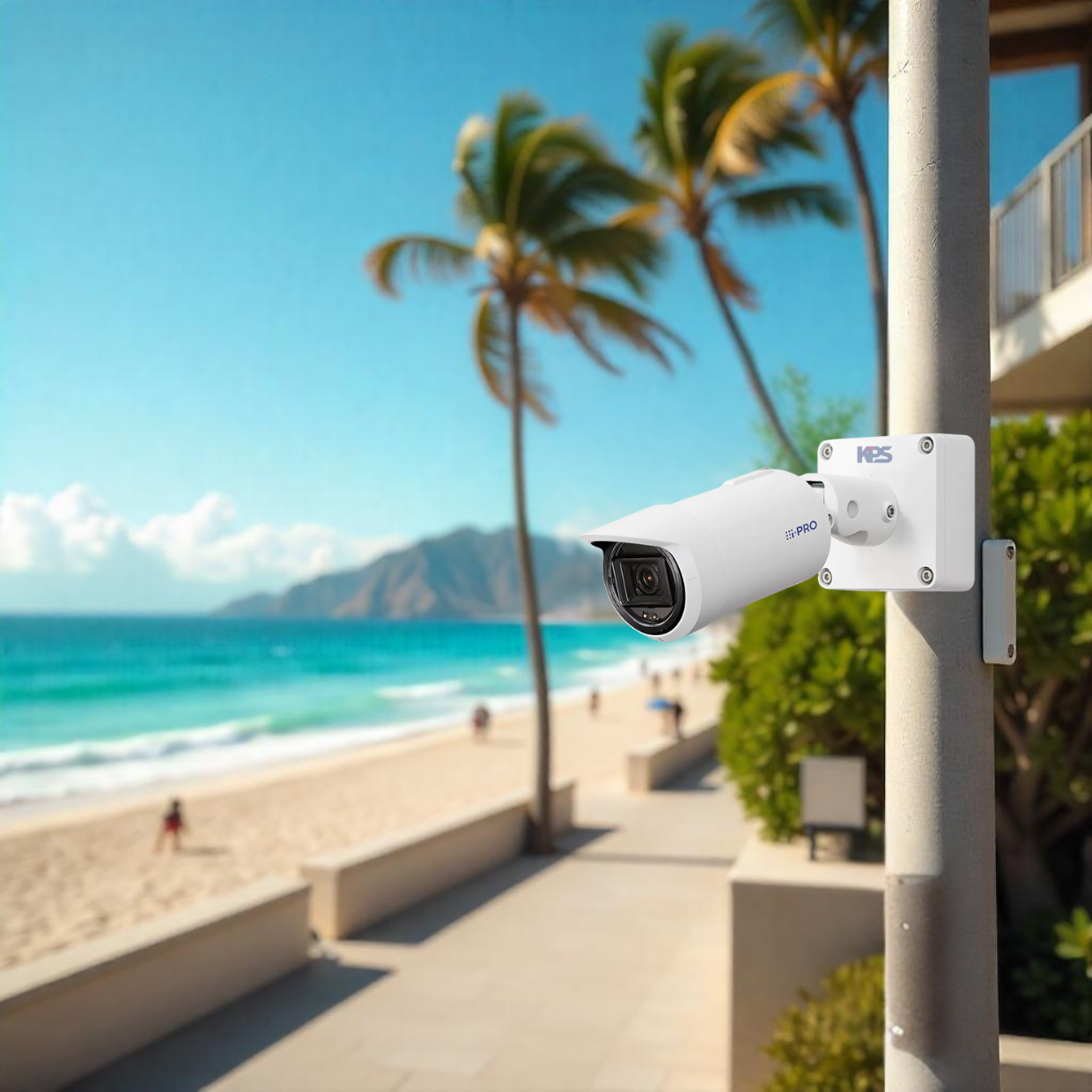
Other important factors to consider

1. Choosing the right type of camera for the marine environment

This is the most important factor. The harsh coastal environment requires the camera to have Special resistance:

  • Water and dust resistance standard (IPRating): Choose a camera with IP66 or IP67 or higher.
    • IP66: Completely dustproof and resistant to strong water jets.
    • IP67: Completely dustproof and can be temporarily submerged in water at a certain depth. This standard is optimized for coastal environments to withstand storms and waves.
    • NEMA 4X: is an American standard, rated The protection of the electrical equipment housing (including the camera) in harsh outdoor environments, with a special focus on corrosion resistance.
  • Corrosion-resistant materials: Camera housings made of stainless steel, high-grade aluminum alloy or specialized plastic materials (e.g., polycarbonate) are more resistant to salt corrosion than conventional types. Avoid cameras with metal housing is susceptible to rust.
  • Ability to operate in high temperatures and humidity: Make sure the camera has a wide operating temperature range to withstand weather changes, especially the high humidity typical of coastal areas.
  • Impact resistance (IK Rating): For public or vandal-prone areas, cameras with IK10 standard (strong impact resistance) will increase durability.

2. Storage System And Accessing Data

Recording and accessing images is the main purpose of a camera, so you need a reliable storage system:

  • Local storage:
    • SD card: Suitable for single or backup cameras, but capacity is limited.
    • NVR/DVR: Reason ideal for multi-camera systems, providing larger storage capacity and centralized management capabilities. The recorder should be placed in a dry, cool, and secure indoor location.
  • Cloud Storage: Provides a secure backup solution, allowing you to access footage from anywhere, even if the camera or recorder is damaged/stolen. This is extremely important choice for coastal security.
  • Mobile apps and software: Make sure the camera or system is compatible with mobile apps so you can view live, review history, and receive instant motion detection alerts remotely.

3. Installation and Regular Maintenance

Even the best cameras need to be properly installed and maintained Regularly:

  • Professional installation: It is recommended to hire units with experience in installing cameras for marine environments. They will know how to wire in walls/protective pipes, use anti-corrosion accessories and ensure the camera is securely mounted and can withstand storms.
  • Periodic inspection and cleaning: Salt and sand can can stick to the lens and camera housing, reducing image quality and causing corrosion. Schedule camera cleaning at least once every 1-2 months. Check joints and brackets for looseness or rust.
  • Check wiring and power source: Make sure the wiring system is covered, waterproof and not bitten by rats. Check the power source is stable to avoid camera interruption or damage due to voltage fluctuations.

Câu hỏi thờng gặp

Tại sao cần lắp camera giám sát ngoài trời tại khu vực ven biển?
Khu vực ven biển thường có mật độ du khách cao, điều kiện môi trường phức tạp và nguy cơ mất an ninh. Lắp camera giúp giám sát chặt chẽ các khu vực trọng yếu, giảm rủi ro trộm cắp và phát hiện xâm nhập bất hợp pháp từ hướng biển.
Vị trí nào là quan trọng nhất khi lắp đặt camera ngoài trời ven biển?
Ba vị trí cần ưu tiên gồm:

Cổng chính & lối ra vào

Bãi đậu xe hoặc khu neo đậu tàu thuyền

Ven bờ, hàng rào và khu vực ít người qua lại
Có nên lắp camera tại khu vực tiếp giáp trực tiếp với biển không?
Có, đặc biệt là những khu vực dễ bị xâm nhập từ hướng biển. Tuy nhiên, cần sử dụng camera chống nước, chống ăn mòn đạt chuẩn IP66, IP67 hoặc NEMA 4X để đảm bảo độ bền.
Camera ven biển cần bảo trì bao lâu một lần?
Tùy điều kiện môi trường, nên bảo trì định kỳ 1–2 tháng/lần, bao gồm: vệ sinh ống kính, kiểm tra seal, dây dẫn, khả năng chống ẩm và chống gỉ.

Other news

What is Lane Departure Warning System (LDWS)? How it works & practical benefits

What is Lane Departure Warning System (LDWS)? How it works & practical benefits

LDWS is a lane departure warning system that uses a front-facing camera to detect lane markings. When the vehicle unintentionally drifts out of its lane without the turn signal..

View detail

AI Camera & Zero Trust Security Vietnam 2025 Conference

AI Camera & Zero Trust Security Vietnam 2025 Conference

The AI ​​Camera & Zero Trust Security 2025 conference provides a space for in-depth exchange and connection of smart security solutions for the future.”

View detail

MES System | The Role of MES in Smart Manufacturing

MES System | The Role of MES in Smart Manufacturing

MES manages real-time production, optimizes quality, productivity, connects ERP, SCADA & IoT for factory 4.0.

View detail

Blockchain Technology: A Revolutionary Solution for the Digital Future in the AI ​​Era

Blockchain Technology: A Revolutionary Solution for the Digital Future in the AI ​​Era

Blockchain is a distributed ledger. Instead of storing data on a central server (like a bank or Facebook), blockchain stores data on thousands of computers in a network.

View detail

Security Monitoring Solutions for Data Center

Security Monitoring Solutions for Data Center

A Data Center (DC) is the central location that houses all servers, storage systems, and mission-critical infrastructure of an organization. Even a minor incident — power loss,..

View detail

KPS accompanies Gia Dinh University at the Workshop: AI Everywhere

KPS accompanies Gia Dinh University at the Workshop: AI Everywhere

KPS and Gia Dinh University organized the Workshop "AI Everywhere", sharing AI applications from experts from CNB, Seagate, Mitel, inspiring technology for Gen Z.

View detail

LEGO Binh Duong Factory | Zero-Emission Factory in Vietnam

LEGO Binh Duong Factory | Zero-Emission Factory in Vietnam

LEGO Binh Duong Factory - a 1.3 billion USD FDI project that meets Carbon Neutral standards, a symbol of green and high-tech production in Vietnam.

View detail

1 2 3 4 5
Công ty cổ phần Hệ Thống An Ninh Khai Phát (gọi tắt là Công ty KPS). GPDKKD: 0310471658 do sở KH & ĐT TP.HCM cấp ngày 24/11/2010. Đại diện pháp luật: Đinh Tấn Đạt.

2010 © Bản quyền thuộc KPS

Online: 22 | Visitors Counter: 13532658

About | Recruitment | News | Contact Us

zalo
messenger