


info@kps.com.vn
+84 903 709 019
In theory, optimizing air conditioning based on room status sounds simple:
However, in real hotel operations, things don’t work with such simple “on/off” logic.
And here is a reality that many overlook:
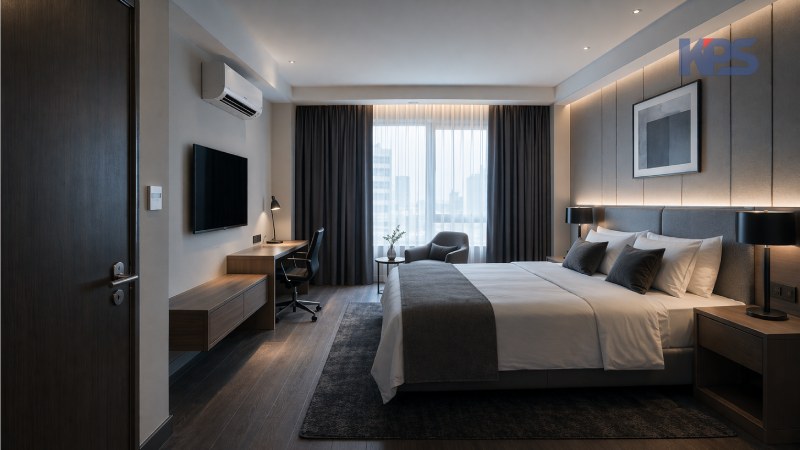
20–30% of hotel rooms still consume air conditioning energy even when unoccupied.
→ This is one of the largest sources of energy waste in hotel operations today.
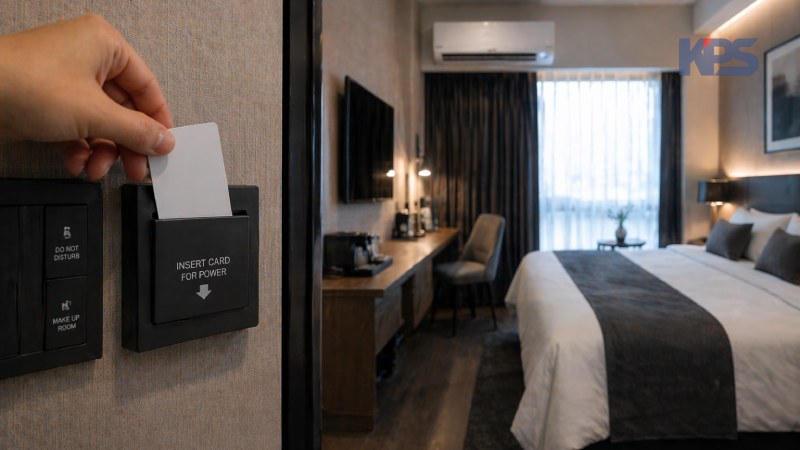
Most hotels use key cards to control power in rooms:
But in reality:
→ Result:
»» Key cards do not reflect the “actual occupancy status” of the room - only whether a card is present.
Instead of relying on guest behavior, modern systems use EMS (Energy Management System) combined with GRMS (Guest Room Management System) to determine the actual room status.
An effective system typically operates on three logic layers:
The system uses multiple data sources:
→ Accurately distinguishes:
This is a critical point to ensure guest experience is not affected.
Instead of turning off the AC:
→ Benefits:
The system doesn’t just “detect” - it reacts in real time:
When the guest returns and opens the door:
→ Guests hardly notice any change, but energy is optimized.
In theory, this model seems straightforward.
But in practice, many projects face challenges:
→ This is why many hotels have the equipment but still fail to save energy.
In hotel energy optimization, the problem is not the lack of equipment - it is:
Fragmented systems, insufficient data, and lack of decision-making capability
KPS delivers EMS solutions through a fully integrated approach, rather than deploying isolated systems.
→ Not just knowing how much energy is used, but where and why
→ Transition from manual operation → data-driven operation
In KPS’s model, HVAC no longer operates independently:
→ This is where the greatest energy savings are achieved
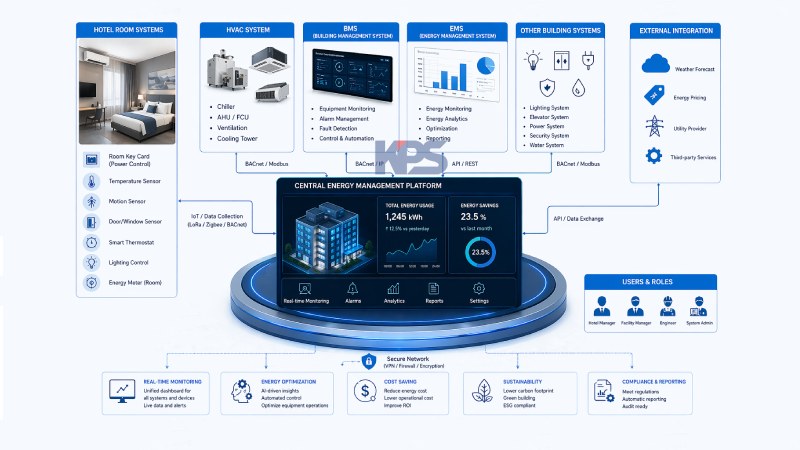
KPS’s key differentiator lies in its ability to integrate multi-system, multi-vendor solutions on an open architecture.
KPS integrates multiple critical building systems:
With over 16 years of experience and partnerships with leading global brands, KPS delivers a flexible solution:
KPS supports the entire project lifecycle:
→ Ensuring the system not only works, but delivers real operational efficiency
Contact KPS to receive consultation and a tailored EMS solution proposal for your hotel.

Other news

Signify and KPS sign strategic partnership agreement.
Signify and KPS have signed a strategic partnership to promote smart, energy-efficient lighting solutions for buildings in Vietnam.
View detail

From APEC 2017 Da Nang to APEC 2027 Phu Quoc: From traditional security solutions to smart IOCs.
From APEC 2017 security monitoring solutions to a smart IOC model for APEC 2027 in Phu Quoc.
View detail

Team Building KPS 2026 | Da Nang - Hoi An - Hue
KPS 2026 Team Building journey in Da Nang - Hoi An - Hue, where teams bond, recharge, and spread sustainable values.
View detail

Energy-saving solutions for hotels and resorts - without compromising the experience.
Consulting and implementing EMS systems for hotels - reducing electricity costs, smarter operation - without compromising customer experience.
View detail

Energy Management System (EMS): Cost and Operation Optimization
EMS solutions help businesses monitor, analyze, and optimize energy in real time, saving 10-30% on electricity costs.
View detail
ABOUT KPS


Regulations and policies
Warranty and return policy Delivery, payment, and feedback Giấy phép kinh doanhContact Information
HO CHI MINH OFFICE
10–12 Dong Van Cong Street, Cat Lai Ward, Ho Chi Minh City.
+842839976099 / 903 709 019
info@kps.com.vn
www.kps.com.vn
Work time
Monday – Friday : 8:00 AM - 17:30 PM
Saturday - Sunday: Off
HA NOI OFFICE
22 Alley 168 Nguyen Xien, Khuong Dinh Ward, Hanoi City
+84 903 709 019
kpshn@kps.com.vn
www.kps.com.vn
Work time
Monday – Friday: 8:00 AM - 17:30 PM
Saturday - Sunday: Off
DA NANG OFFICE
490 Nguyen Tri Phuong, Hoa Cuong Ward, Da Nang City
+84 903 709 019
kpsdn@kps.com.vn
www.kps.com.vn
Work time
Monday – Friday: 8:00 AM - 17:30 PM
Saturday - Sunday: Off
CAN THO OFFICE
11/11 Tran Binh Trong, Ninh Kieu Ward, Ninh Kieu District, Can Tho City.
+84 090 709 019
kpsct@kps.com.vn
www.kps.com.vn
Work time
Monday – Friday: 8:00 AM - 17:30 PM
Saturday - Sunday: Off
SERVICE CENTER - WAREHOUSE
10–12 Dong Van Cong Street, Cat Lai Ward, Ho Chi Minh City.
+ 84 28 3997 0609
baohanh@kps.com.vn
www.kps.com.vn
Work time
Monday – Friday: 8:00 AM - 17:30 PM
Saturday - Sunday: Off
2010 © Bản quyền thuộc KPS
Online: 23 | Visitors Counter: 17548494
About | Recruitment | News | Contact Us


