KPS System Corp | Công ty cổ phần Hệ Thống An Ninh Khai Phát

Smart Factory - Vietnam Smart Factory Trend


In the context of the Industrial Revolution 4.0 spreading strongly around the world, Smart Factory has become an inevitable trend, opening a new era of production - where technology, data and automation converge to create leaps in productivity and quality. If in the past, traditional factories relied heavily on manual labor, now the smart production model brings the ability to connect - analyze - optimize in real time, helping businesses improve their competitiveness and be ready to integrate into the global value chain.

Overview of Smart Factory

What is a Smart Factory? The difference from a traditional factory

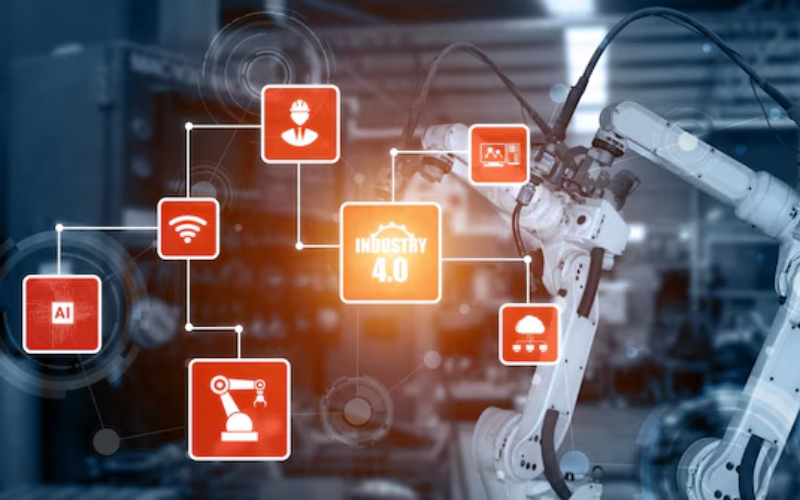
Smart Factory is an advanced production model that applies modern technologies such as Internet of Things (IoT), artificial intelligence (AI), Big Data, automation systems and real-time data analysis. Not only stopping at automation, smart factories also have the ability to self-monitor, self-optimize and make decisions based on data - completely different from the traditional factory model.

Compared to traditional factories that rely heavily on manual labor and discrete management systems, Smart Factory brings:

  • Continuous connection: All equipment, production lines and management systems are connected in a unified network.
  • Data-based decision making: Instead of relying entirely on human experience, AI systems analyze data and provide optimal solutions.
  • High flexibility: Can quickly change processes, meet market needs without interrupting production.

The importance of smart factories in the era of Industry 4.0

In the Industrial Revolution 4.0, applying the Smart Factory model has become an inevitable trend. Manufacturing enterprises need to:

  • Increase productivity and product quality.
  • Reduce operating costs, limit waste.
  • Ensure data transparency and real-time management.
  • Improve competitiveness in the global supply chain.

Smart Factory not only helps businesses optimize internal operations, but also opens up opportunities for international integration, meeting increasingly stringent requirements for quality, speed and sustainability.

Why is Vietnam starting to shift to this model?

Vietnam is facing a great opportunity to become a destination for many international manufacturing corporations. Some factors promoting the Smart Factory trend in Vietnam include:

  • National digital transformation policy and orientation for industrialization and modernization.
  • Global competition requires Vietnamese businesses to innovate to participate more deeply in the supply chain.
  • Cheap labor costs are no longer a sustainable advantage, instead technology and productivity are the keys.

Key industries such as electronics, textiles, automobiles, food, and logistics are in need of solutions to increase production efficiency. Therefore, Smart Factory is gradually becoming a strategic choice for Vietnamese enterprises to maintain their competitive position in the context of global economic integration.
Core Technology in Smart Factory

Internet of Things (IoT) – Connecting Everything

  • IoT allows machines, sensors, and production lines to connect with each other and transmit data in real time.
  • Thanks to IoT, businesses can monitor equipment status, manage energy, and control quality right during production.
  • This is an important foundation to help optimize the entire operating process.

Artificial Intelligence (AI) and Machine Learning

  • AI helps analyze huge amounts of data to predict failures, optimize maintenance schedules, and make smart production decisions.
  • Machine Learning allows the system to learn from data, thereby becoming more and more accurate in forecasting demand and adjusting production processes.

Big Data & Data Analysis

  • In Smart Factory, data is continuously collected from thousands of devices.
  • Big Data technology allows storing, processing, and analyzing large volumes of data, thereby creating more effective operating strategies.
  • Thanks to data analysis, businesses can optimize supply chains, reduce costs and improve product quality.

Automation & Smart Robots

  • Industrial robots and automation systems help increase productivity, reduce manual errors and improve accuracy.
  • Today, robots are also integrated with AI to have the ability to self-adapt and self-adjust according to the production process.
  • Automation lines play an important role in shortening production time and improving product quality.

Integrated management systems (MES, ERP, SCADA, BMS)

  • MES (Manufacturing Execution System): Manage and monitor production activities in real time.
  • ERP (Enterprise Resource Planning): Connect all business resources from production to finance and human resources.
  • SCADA & BMS: Control and monitor processes, energy and infrastructure.

The combination of these systems gives businesses a comprehensive, transparent and accurate view of the factory.

Benefits of Smart Factory

The application of Smart Factory brings many practical benefits, not only in production but also in the entire business management activities.

Improve productivity and production efficiency

  • Automation helps shorten production time, reduce manual errors.
  • Smart systems optimize processes, helping businesses increase output without increasing human resources.

Improve product quality

  • Sensors and AI monitor production in real time, detect product errors early.
  • Thanks to that, the error rate is reduced, products meet high quality standards and are more stable.

Reduce operating costs

  • Effectively manage energy, raw materials and machinery, limit waste.
  • Predictive Maintenance helps prevent unexpected breakdowns, reduce repair costs.

Data transparency and real-time management

  • Integrated management systems (MES, ERP, SCADA) help management have a comprehensive view of factory operations.
  • Make quick and accurate decisions based on data instead of emotions.

Increase flexibility and adaptability

  • Smart factories can quickly reconfigure production lines to meet market demand.
  • Businesses can easily develop new products without interrupting the process.

Increase competitiveness and international integration
  • Smart factories help Vietnamese businesses meet global standards for quality and productivity.
  • This is a great advantage to participate more deeply in the international supply chain, attract investment and expand the market.

Smart Factory Trends in Vietnam

In the context of the 4.0 Industrial Revolution, Vietnam is witnessing a strong shift to the Smart Factory model. This is not only a global trend, but also an urgent need to improve competitiveness.

Policies and directions from the Government

The development of Smart Factory in Vietnam is closely linked to digital transformation and industrialization programs issued by the Government. Some notable policies:

National Digital Transformation Strategy to 2025, with a vision to 2030

  • Approved under Decision No. 749/QD-TTg. Vietnam aims to become a digital nation, with a digital government, digital economy and digital society.
  • Promoting digital transformation for Vietnam to catch up, progress together and surpass. The digital technology enterprise system is expected to develop strongly and have global competitiveness.

Institutional innovation, perfecting the legal framework and infrastructure for Industry 4.0 & smart manufacturing

  • Resolution 52/NQ/TW of the Politburo (2019) requires promoting digital transformation, industrialization - modernization, innovation.
  • Decision to develop a National Strategy for developing a digital economy and digital society, promulgating standards and regulations related to information technology, IoT, cybersecurity, automation, robotics, etc.

Government Directives and Action Recommendations

  • Directive 16/CT-TTg in 2017 on enhancing capacity to access Industry 4.0 - assigning responsibilities to ministries, branches and localities to develop and implement specific action plans.
  • Promote the development of information technology infrastructure, prioritize the development of broadband networks, data centers; encourage manufacturing enterprises to apply IT and new technologies.

Key science and technology program to support industry 4.0

  • The program "Supporting research, development and application of technology of industry 4.0" (KC-4.0/19-25) was developed by the Ministry of Science and Technology to promote research and application of key technologies, pilot advanced production models.
  • This program supports pilot innovation of governance, production-business models in key areas towards smart production.

Standardization & technical standards/regulations system

  • Developing a national standards system related to smart production: standards on IoT, industrial automation, robots, information security, cyber security, traceability/supply chain shell.
  • Project to develop a national standardization strategy for the period 2021-2025, with a vision to 2030 to meet the requirements of smart production and international integration.

Investment incentives, encouraging technological innovation and supporting businesses

  • Tax and credit incentives for businesses investing in high-tech production lines, automation, technological innovation, and applying modern equipment in production.
  • Support small and medium-sized enterprises to access 4.0 technology through pilot programs, supporting applied research and technology transfer.

Human resource development, training, research and innovation

  • The Government recognizes the need for high-quality human resources and high-tech expertise to meet smart manufacturing.
  • STEM, IT and digital training programs are promoted; cooperation between universities, research institutes and businesses to develop necessary skills.

Industry leading in application

  • Electronics and high technology: Large FDI corporations such as Samsung, LG, Intel have deployed smart production lines.
  • Textiles, footwear: Applying automation to quickly respond to orders, reducing dependence on manual labor.
  • Automotive - precision mechanics: Using robots, AI and IoT to improve product quality.
  • Food and logistics: Optimizing supply chains, controlling food safety quality.

Participation of Vietnamese enterprises

  • More and more domestic enterprises, especially medium and large enterprises, are starting to invest in Smart Factory.
  • Domestic software and digital solution companies are also participating in developing management platforms and data connections.
  • Cooperating with international partners to learn technology, transfer knowledge and improve human resources.

Market and requirements from global customers

  • International partners require high-quality, stable and traceable products.
  • This encourages Vietnamese enterprises to apply Smart Factory to qualify to participate in the supply chain.

Challenges when deploying Smart Factory in Vietnam

High initial investment costs

  • Equipping automatic machines, IoT systems, robots, AI, integrated management systems requires huge investment capital.
  • Small and medium-sized enterprises often have difficulty accessing capital or paying for maintenance and system upgrade costs later.

Lack of skilled human resources

  • About 45% of FDI companies believe that the lack of highly skilled human resources is a major barrier.
  • Many engineers and workers are not familiar with modern technology such as robots, AI, IoT; practical capacity is low compared to theoretical requirements.
  • Difficulty in reskilling and updating new knowledge.

Asynchronous technology infrastructure & connection

  • Stable, high-speed internet connection, bandwidth, telecommunications network (5G, fiber optic) are not yet widespread or uniform in industrial parks and small factories.
  • Stable energy infrastructure, electricity, network systems, and sensors may not meet Smart Factory standards.

Lack of standardization in processes, data, and systems

  • Many factories do not have clear internal processes, data is not standardized, and it is difficult to connect between management, operation, and production systems.
  • Legacy systems and equipment are difficult to integrate with new technology.

Network security & data security

  • When data, machines, and systems are connected online, the risk of cyber attacks, data loss, or illegal exploitation increases.
  • Many small businesses do not have policies or specialized human resources for IT security.

Lack of awareness and technology vision

  • Some businesses are still unclear about the specific benefits of Smart Factory, or are hesitant to invest due to fear of risks.
  • Corporate culture lacks experience in working with data (data-driven), or flexibility to change management models.

Constraints from supply chain & raw material supply

  • The domestic supporting industry is not strong, still heavily dependent on imported components and equipment. When technology requires modern components, high prices, long shipping times - affecting progress and costs.
  • The domestic supply chain is not synchronized, logistics (transportation, warehousing) is not complete.

Support policies, legal framework & mechanisms are not complete

  • Although there are many policies to support digital transformation, there are still unclear and inconsistent costs, procedures, licenses, and regulations.
  • Incentive mechanisms, financial support (loans, tax reductions, subsidies) for Smart Factory are not popular or difficult to access for SMEs.

Investment Risks and ROI

  • The payback period can be very long, and businesses can be at risk as technology changes rapidly.
  • If the system is not well maintained, or if the features are not fully utilized, the Smart Factory may not deliver the desired results.

About KPS

Khai Phat Security System Joint Stock Company (KPS System Corp) - was established in 2010, with headquarters in Ho Chi Minh City and representative offices in Hanoi, Da Nang, Can Tho. After more than a decade of development, KPS has affirmed its position as one of the leading units in the field of importing, distributing and deploying security - safety - network infrastructure - building management solutions in Vietnam.

KPS's strengths & capabilities

Diverse product ecosystem: KPS is the official distribution partner of many prestigious international brands such as Bosch, Tycon, CNB, Legrand, Genetec, MAG, i-PRO, Simplex, GST,…. Products include: surveillance cameras, access control systems, public address systems, fire protection systems, LAN - TEL networks, telecommunications infrastructure, etc.

Comprehensive solutions & integration capabilities: Not only distributing individual products, KPS provides comprehensive integrated solutions. Systems can be flexibly connected to existing infrastructure, ensuring continuity, stability and safety in operation.

Diverse project practices: KPS has accompanied many large domestic and foreign customers, as well as deployed solutions for industrial parks, office buildings, resorts, luxury apartments, commercial centers and seaports.

Professional technical services & support: With a branch system in many provinces and cities and a team of experienced engineers, KPS is committed to supporting customers from consulting, implementation to warranty, after-sales maintenance, ensuring products and services meet international standards.

Role in Smart Factory & Industrial Park

In the trend of Smart Factory, KPS plays an important role in building a security platform - monitoring - network infrastructure - operational control, which are indispensable pillars of the modern factory model. With flexible integration capabilities, KPS can provide comprehensive solutions for each factory or for the entire industrial park, contributing to supporting Vietnamese enterprises in the digital transformation process, optimizing production and ensuring operational safety.

Affirming its pioneering role in accompanying enterprises on the digital transformation journey, KPS cooperated with Genetec Inc. (Canada) and CNB Global Technology (Korea) to organize the event:
"Smart Factory & Security Summit 2025 - Smart Factory & Security Conference 2025".

  • Time: October 2, 2025
  • Location: Sofitel Saigon Plaza, District 1, City. HCM

Event highlights:

  • Gathering more than 10 international technology brands: Bosch, Asus, Legrand, Optex, ABB…
  • Sharing the Smart Factory & Smart Security trend 2025 – 2030.
  • Introducing the Integrated Security Solution (ISS) application through a real project at LEGO Binh Duong.
  • Experience a live demo booth with the most advanced solutions.
  • In-depth discussion with experts, connecting industrial park management boards, investors, general contractors and design consultants.

Through the event, KPS hopes to work with international partners to promote the Smart Factory trend in Vietnam, bringing modern – safe – sustainable solutions to manufacturing enterprises, industrial parks and smart cities.

Register early to receive a free ticket – limited number of seats!

Contact Hotline: 0933 933 018


Other news

Security Monitoring Solutions for Data Center

Security Monitoring Solutions for Data Center

A Data Center (DC) is the central location that houses all servers, storage systems, and mission-critical infrastructure of an organization. Even a minor incident — power loss,..

View detail

KPS accompanies Gia Dinh University at the Workshop:

KPS accompanies Gia Dinh University at the Workshop:

KPS and Gia Dinh University organized the Workshop "AI Everywhere", sharing AI applications from experts from CNB, Seagate, Mitel, inspiring technology for Gen Z.

View detail

LEGO Binh Duong Factory | Zero-Emission Factory in Vietnam

LEGO Binh Duong Factory | Zero-Emission Factory in Vietnam

LEGO Binh Duong Factory - a 1.3 billion USD FDI project that meets Carbon Neutral standards, a symbol of green and high-tech production in Vietnam.

View detail

Trends and policies for developing Green Data Centers

Trends and policies for developing Green Data Centers

Vietnam promotes green data centers, towards sustainable digital infrastructure, energy efficiency and carbon emission reduction.

View detail

AI cameras record sharp decrease in traffic violations in Ho Chi Minh City

AI cameras record sharp decrease in traffic violations in Ho Chi Minh City

KPS – đơn vị tiên phong cung cấp giải pháp giám sát giao thông thông minh, ứng dụng camera AI giúp nâng cao an toàn, giảm vi phạm và tối ưu vận..

View detail

EN 54 Standard - Meaning and application in fire alarm systems

EN 54 Standard - Meaning and application in fire alarm systems

EN 54 is a series of European Standards for fire detection and alarm systems.

View detail

1 2 3 4 5
Công ty cổ phần Hệ Thống An Ninh Khai Phát (gọi tắt là Công ty KPS). GPDKKD: 0310471658 do sở KH & ĐT TP.HCM cấp ngày 24/11/2010. Đại diện pháp luật: Đinh Tấn Đạt.

2010 © Bản quyền thuộc KPS

Online: 3 | Visitors Counter: 13387644

About | Recruitment | News | Contact Us

zalo
messenger