


info@kps.com.vn
+84 903 709 019
In an era of volatile energy prices and increasing Net Zero pressure, simply “monitoring” electricity consumption is no longer enough.
A modern EMS is not just a metering dashboard-it acts as a “brain” that helps businesses shift from passive tracking to proactive control of costs and operational performance.
EMS (Energy Management System) is a solution that enables businesses to measure - analyze - control - and optimize energy usage in real time.
The system collects data from multiple sources such as electricity, water, HVAC, lighting, and production lines… then aggregates and analyzes it to support more accurate operational decisions.
→ If BMS is the “control system”, EMS is what tells you how to control for maximum efficiency.
In simple terms, EMS helps businesses answer three critical questions:
EMS is typically deployed alongside systems such as:
In practice, EMS does not replace BMS. Instead:
→ When integrated with a Building Management System, businesses can build a smarter and more efficient operational platform.
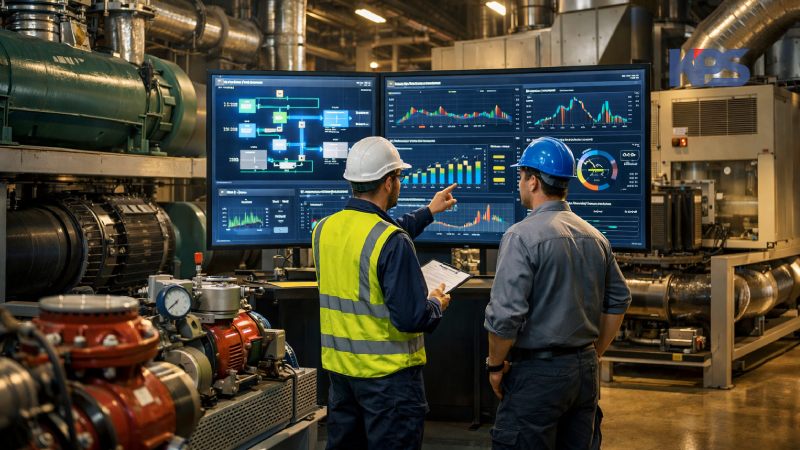
EMS is a critical component within the ELV (Extra Low Voltage) system of a building—not only reducing energy costs but directly addressing four core challenges:
This is the most common issue.
Businesses often face:
EMS helps by:
→ Reduce 10-30% energy costs without replacing existing systems.
No EMS = no data → no optimization.
EMS enables:
→ Decisions are made based on data, not assumptions.
Traditional approach: fix when broken → costly and disruptive.
EMS allows businesses to:
→ Reduce downtime, extend asset lifespan, and lower repair costs.
Businesses are increasingly required to:
EMS supports:
→ Enhance brand credibility and access to global partnerships and green financing.
In most buildings, factories, or residential complexes, HVAC accounts for 40-60% of total energy consumption.
The problem is:
HVAC systems are often operated based on fixed settings-not real energy data.
→ That’s why EMS and HVAC must go hand in hand.
If only HVAC exists:
If only EMS exists:
When combined:
→ Shift from monitoring → true optimization
In reality, most HVAC systems:
EMS enables:
→ HVAC shifts from schedule-based → demand-based operation
You can optimize:
But HVAC is the largest energy consumer.
With EMS applied to HVAC:
→ Directly impacts 70-80% of total energy-saving potential
Traditional HVAC reacts only to temperature sensors.
With EMS integration, HVAC can analyze:
→ More precise cooling/heating, avoiding overcooling / undercooling and enabling continuous optimization.
EMS + HVAC form the core layer of a smart ecosystem:
Without EMS → no data → AI & Smart Building remain theoretical.
Improper HVAC operation leads to:
EMS helps:
→ Reduce wear and extend equipment lifespan.
EMS collects data from:
Data is processed into:
BMS executes control actions:
→ In simple terms:
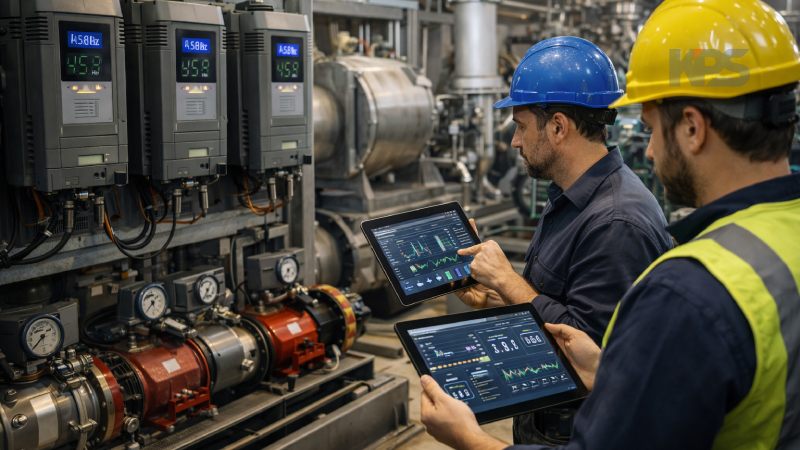
In energy optimization, deploying isolated systems is no longer effective.
What businesses truly need is an integrated solution where data, operation, and control are unified on a single platform.
KPS approaches the problem differently:
Not just saving energy → but optimizing how buildings and factories use energy as a whole.
Instead of fragmented systems, KPS builds a unified architecture:
→ All systems operate within a single integrated ecosystem
KPS solutions are built on open platforms from leading global brands:
Additionally, KPS integrates solutions across multiple domains:
→ Enables flexible integration without vendor lock-in.
With over 16 years of experience, KPS has delivered more than 800 projects nationwide:
In a Smart Building ecosystem, EMS + HVAC is not just about saving energy-it is the foundation for intelligent and sustainable operations.
You can also explore more in: BMS implementation cost for a clearer investment perspective.
KPS supports businesses throughout the entire project lifecycle - from consulting, design, and implementation to operation, maintenance, and long-term optimization.
Contact KPS today for a site assessment and tailored solution for your project.

Other news

Signify and KPS sign strategic partnership agreement.
Signify and KPS have signed a strategic partnership to promote smart, energy-efficient lighting solutions for buildings in Vietnam.
View detail

From APEC 2017 Da Nang to APEC 2027 Phu Quoc: From traditional security solutions to smart IOCs.
From APEC 2017 security monitoring solutions to a smart IOC model for APEC 2027 in Phu Quoc.
View detail

Team Building KPS 2026 | Da Nang - Hoi An - Hue
KPS 2026 Team Building journey in Da Nang - Hoi An - Hue, where teams bond, recharge, and spread sustainable values.
View detail

Optimizing air conditioning based on room conditions in hotels and resorts.
Why do 20-30% of hotel rooms still have their air conditioning running even when there are no guests?
View detail

Energy-saving solutions for hotels and resorts - without compromising the experience.
Consulting and implementing EMS systems for hotels - reducing electricity costs, smarter operation - without compromising customer experience.
View detail
ABOUT KPS


Regulations and policies
Warranty and return policy Delivery, payment, and feedback Giấy phép kinh doanhContact Information
HO CHI MINH OFFICE
10–12 Dong Van Cong Street, Cat Lai Ward, Ho Chi Minh City.
+842839976099 / 903 709 019
info@kps.com.vn
www.kps.com.vn
Work time
Monday – Friday : 8:00 AM - 17:30 PM
Saturday - Sunday: Off
HA NOI OFFICE
22 Alley 168 Nguyen Xien, Khuong Dinh Ward, Hanoi City
+84 903 709 019
kpshn@kps.com.vn
www.kps.com.vn
Work time
Monday – Friday: 8:00 AM - 17:30 PM
Saturday - Sunday: Off
DA NANG OFFICE
490 Nguyen Tri Phuong, Hoa Cuong Ward, Da Nang City
+84 903 709 019
kpsdn@kps.com.vn
www.kps.com.vn
Work time
Monday – Friday: 8:00 AM - 17:30 PM
Saturday - Sunday: Off
CAN THO OFFICE
11/11 Tran Binh Trong, Ninh Kieu Ward, Ninh Kieu District, Can Tho City.
+84 090 709 019
kpsct@kps.com.vn
www.kps.com.vn
Work time
Monday – Friday: 8:00 AM - 17:30 PM
Saturday - Sunday: Off
SERVICE CENTER - WAREHOUSE
10–12 Dong Van Cong Street, Cat Lai Ward, Ho Chi Minh City.
+ 84 28 3997 0609
baohanh@kps.com.vn
www.kps.com.vn
Work time
Monday – Friday: 8:00 AM - 17:30 PM
Saturday - Sunday: Off
2010 © Bản quyền thuộc KPS
Online: 22 | Visitors Counter: 17548763
About | Recruitment | News | Contact Us


