


info@kps.com.vn
+84 903 709 019
Conventional Fire Alarm System GST: A Reliable Fire Protection SolutionAre you looking for a reliable fire alarm solution for your building? The GST conventional fire alarm system is an excellent choice. With its ability to detect fires quickly and accurately, the GST system helps protect lives and property from fire hazards. This article will provide a detailed understanding of the GST conventional fire alarm system and the benefits it offers.
A conventional fire alarm system, also known as a zoned fire alarm system, is a basic fire safety solution in which input fire alarm devices (such as smoke detectors, heat detectors, and manual call points) are connected by zones and linked to the fire alarm control panel. When a fire incident occurs, the system identifies and alerts the affected zone but does not specify the exact location of the activated device. This allows facility managers to quickly identify and address the issue within the designated area.
GST (Gulf Security Technology) is a leading brand in the manufacturing of fire protection equipment and solutions. Established in 1993 in China, GST quickly gained recognition in both domestic and international markets. In 2009, GST became a part of the Honeywell Group, marking a significant milestone in expanding its reach and enhancing product quality.
With a diverse range of products, from addressable fire alarm systems to customized fire suppression solutions, GST caters to various industries. GST products are designed with advanced technology, ensuring high sensitivity in fire detection and alarm signaling while complying with international standards such as CCCF, LPCB, UL, and CE.
In Vietnam, GST has built a strong reputation by providing high-quality fire protection equipment that meets the strict requirements of the market. The system's flexibility in design and operational efficiency makes GST a trusted choice for various buildings, including factories, offices, shopping malls, and industrial zones.
With a commitment to continuous innovation and the application of new technology, GST continues to play a crucial role in improving global fire safety.
The GST conventional fire alarm system is widely applied across different types of buildings due to its effectiveness and high reliability. Below are some key areas where this system is used:
With its flexible design and high integration capability, the GST conventional fire alarm system effectively meets fire safety protection needs for a wide range of buildings.
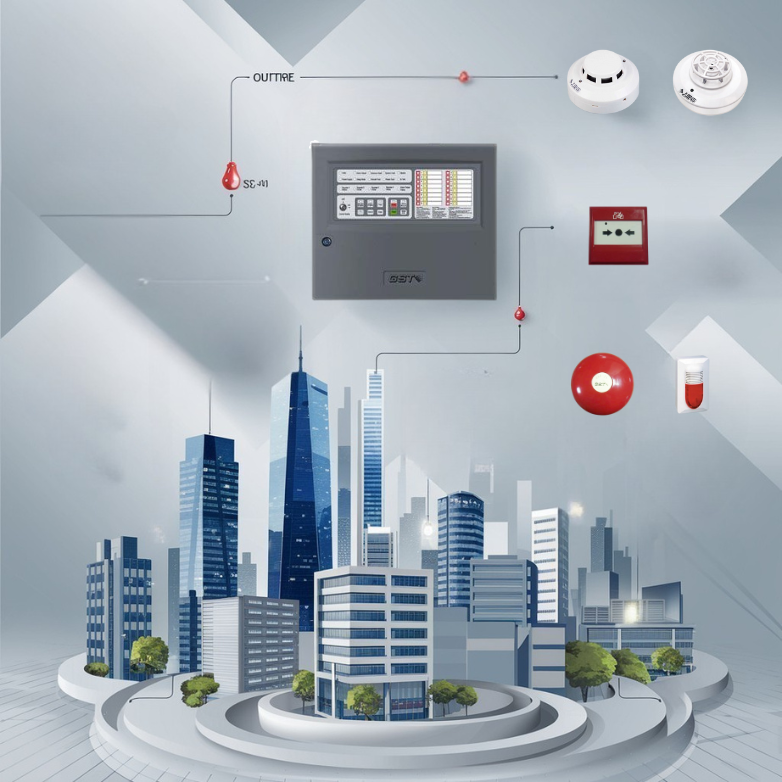
The GST conventional fire alarm system consists of three main components: input devices, the fire alarm control panel, and output devices.
These components work closely together to ensure early detection and timely alarm activation in the event of a fire, helping minimize damage to people and property.
The GST conventional fire alarm system operates based on continuous monitoring and rapid response when detecting fire signs. The system's operation process includes the following stages:
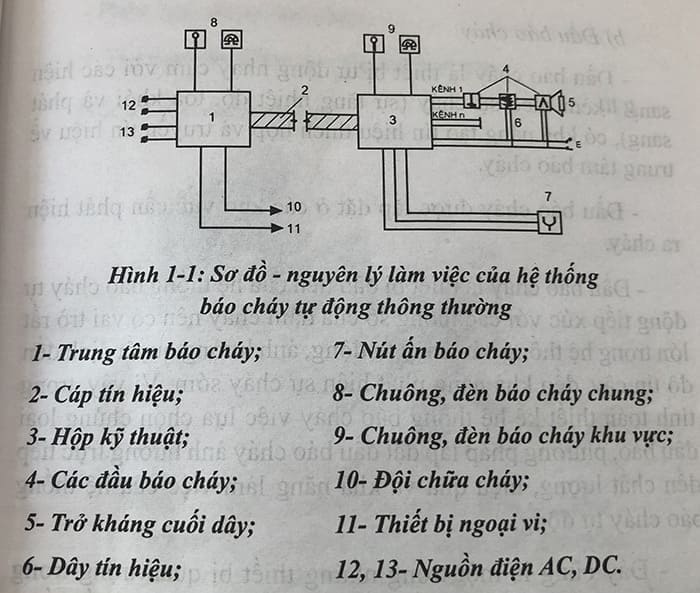
The GST conventional fire alarm system offers numerous outstanding advantages, effectively meeting fire safety needs for various types of buildings. Below are some key benefits of this system:
These advantages make the GST conventional fire alarm system a trusted choice for buildings requiring effective and economical fire protection solutions.
Proper installation and maintenance of the GST conventional fire alarm system require strict adherence to technical procedures to ensure efficiency and safety. Below is a basic guide for this process:
Following proper installation and maintenance procedures ensures the GST conventional fire alarm system operates efficiently and provides reliable fire protection for people and property.
Other news

KPS officially became the distributor of Simplex - Johnson Controls in Vietnam from July 2025.
Từ 7/2025, KPS là nhà phân phối Simplex – Johnson Controls tại Việt Nam, giải pháp báo cháy UL, FM, sản xuất Bắc Mỹ chuẩn quốc tế.
View detail

Giải pháp bãi giữ xe thông minh
KPS provides smart parking solutions with integrated comprehensive security, suitable for apartment buildings, offices, urban areas, and factories.
View detail

ABB i-bus KNX Solution
The ABB i-bus KNX platform for Smart Homes and Smart Buildings supports BMS, IoT, MATT, voice control, and energy management.
View detail

Intrusion alarm system
In-depth analysis of intrusion alarm systems: architecture, standards, sensors, and security integration trends for projects. Bosch & Optex solutions by KPS.
View detail

Anti-Copying Access Control Solution
Discover the vulnerabilities of 125kHz cards, MIFARE Classic, and anti-copying solutions with DESFire EV3, HID Seos, and OSDP.
View detail

MX Addressable Simplex technology
MX Addressable Simplex technology is a two-wire, loop-powered, addressable fire alarm system supporting 250 devices per loop, and is UL & EN54 compliant.
View detail
ABOUT KPS


Contact Information
HO CHI MINH OFFICE
10–12 Dong Van Cong Street, Cat Lai Ward, Thu Duc City, Ho Chi Minh City.
+842839976099 / 903 709 019
info@kps.com.vn
www.kps.com.vn
Work time
Monday – Friday : 8:00 AM - 17:30 PM
Saturday - Sunday: Off
HA NOI OFFICE
22 Alley 168 Nguyen Xien, Khuong Dinh Ward, Hanoi City
+84 903 709 019
kpshn@kps.com.vn
www.kps.com.vn
Work time
Monday – Friday: 8:00 AM - 17:30 PM
Saturday - Sunday: Off
DA NANG OFFICE
490 Nguyen Tri Phuong, Hoa Cuong Ward, Da Nang City
+84 903 709 019
kpsdn@kps.com.vn
www.kps.com.vn
Work time
Monday – Friday: 8:00 AM - 17:30 PM
Saturday - Sunday: Off
CAN THO OFFICE
11/11 Tran Binh Trong, Ninh Kieu Ward, Ninh Kieu District, Can Tho City.
+84 090 709 019
kpsct@kps.com.vn
www.kps.com.vn
Work time
Monday – Friday: 8:00 AM - 17:30 PM
Saturday - Sunday: Off
SERVICE CENTER - WAREHOUSE
10–12 Dong Van Cong Street, Cat Lai Ward, Thu Duc City, Ho Chi Minh City.
+ 84 28 3997 0609
baohanh@kps.com.vn
www.kps.com.vn
Work time
Monday – Friday: 8:00 AM - 17:30 PM
Saturday - Sunday: Off
2010 © Bản quyền thuộc KPS
Online: 14 | Visitors Counter: 14271356
About | Recruitment | News | Contact Us


.png)


