


info@kps.com.vn
+84 903 709 019
How can a system recognize, analyze and warn accurately without causing false alarms? And what makes modern buildings gradually switch to using smart fire alarm systems instead of traditional models? To better understand this system, let's find out with KPS in the article below!
A smart fire alarm system (Smart Fire Alarm System) is a modern fire prevention and fighting solution that applies IoT (Internet of Things), AI and automation technology to detect early - accurately warn - quickly handle fire and explosion risks.
Unlike conventional fire alarm systems that only send signals when smoke or heat sensors reach the threshold, smart fire alarm systems continuously collect and analyze environmental data in real time, allowing early detection of abnormal signs such as a slight increase in temperature, CO gas or changes in smoke density in the air.
Through network connection, all information is sent to the control center or cloud management platform, helping operators to monitor, control and receive warnings right on their computers, phones or mobile applications, anywhere.
The application of smart technology in the fire prevention and fighting system brings many values such as:
Therefore, the smart fire alarm system is not only a safety device, but also an important part of the digital transformation strategy of the fire prevention and fighting industry, contributing to building a safer living and working environment for the community.
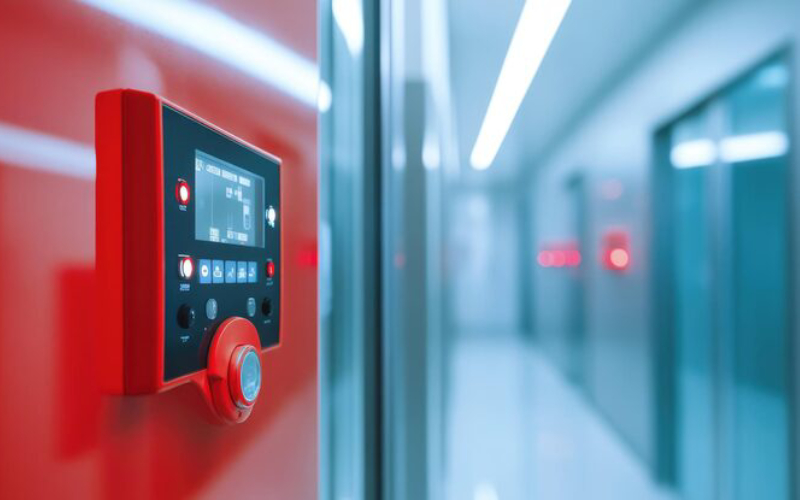
Traditional fire alarm systems operate based on the principle of zoning. Smoke detectors, heat detectors, emergency buttons, sirens and fire alarm lights are connected in parallel in each separate zone. When an incident occurs, the fire alarm center only receives a warning signal by zone, meaning that it can determine the fire area, but cannot accurately locate the location or triggering device. With a simple operating mechanism, traditional fire alarm systems have the advantage of low investment costs, easy installation and operation, suitable for small buildings such as offices, shops, warehouses, or individual houses.
The system cannot customize the sensitivity separately for each area because all detectors in the same zone use the same trigger threshold. This causes false alarms to occur frequently, especially in environments with smoke, dust, steam or sudden temperature changes. In addition, when there is a fire alarm signal, the operator must manually check each area to determine the actual fire point, which wastes initial response and handling time.
Traditional systems also operate independently and cannot be integrated with other control systems in the building such as HVAC, CCTV, BMS or PA systems. In addition, equipment maintenance and inspection requires manual operations, making management difficult in large-scale projects.
Smart fire alarm system is a comprehensive upgrade of the traditional system, applying address technology, IoT and AI to improve accuracy, monitoring capabilities, and automation in fire prevention and fighting.
Each device in the system - from smoke detectors, heat detectors, emergency buttons to sirens and control modules - is assigned a separate identification address. Thanks to that, when an incident occurs, the control center can accurately identify which device is activated, display the specific location on the map or building floor plan, helping the operator quickly identify the fire point and respond promptly.
Not only stopping at the detection ability, the smart fire alarm system also analyzes sensor signals using AI algorithms, helping to distinguish between real and fake smoke, thereby minimizing false alarms - one of the biggest limitations of traditional technology.
In terms of management capabilities, the system can be monitored and controlled remotely via mobile applications, specialized software or cloud platforms. The person in charge can monitor the status of each device, fire alarm history, event logs, and receive instant notifications via SMS, email or app.
Another outstanding advantage is the extensive integration. The smart fire alarm system can be easily connected to the BMS system, Access Control, HVAC, CCTV, PA sound system and automatic fire extinguishing system, creating a chain reaction (Cause & Effect) such as: broadcasting evacuation instructions, opening the exhaust fan, cutting off the power to the fire area, or activating the fire sprinkler.
In addition, the system also has the ability to self-diagnose equipment errors, warn of periodic maintenance and store activity logs. This helps improve operational management efficiency, minimize maintenance costs and ensure the system is always ready.
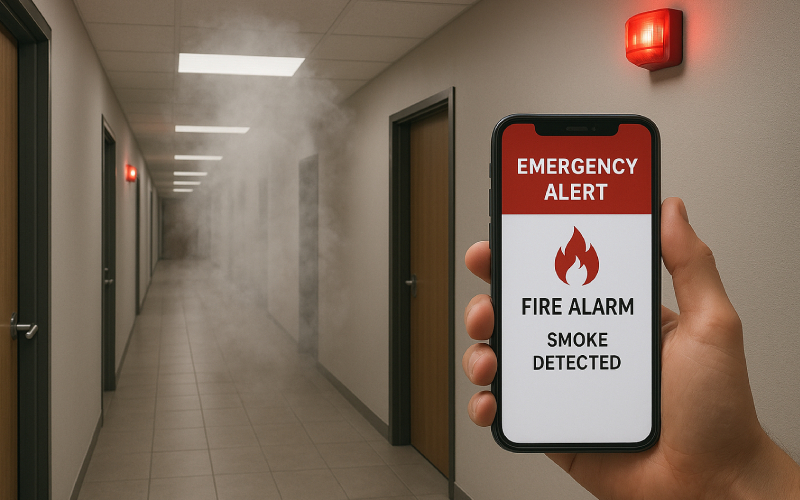
Smart fire alarm control center
Types of sensors
Depending on the characteristics of the protected area, the system will be equipped with many different types of sensors:
Display and warning devices
Communication module, IoT gateway, cloud connection
The smart fire alarm system operates based on the principle of collection - analysis - warning and response, combining modern sensors and advanced data processing technology to detect early signs of fire and explosion, minimize false alarms and optimize rescue capabilities.
When activated, smart detectors will continuously monitor the surrounding environment, until detecting abnormal changes in smoke, temperature or gas concentration, these detectors will transmit digital signals to the smart fire alarm control center. The center immediately analyzes the received data, determines the exact location of the signal transmitter and assesses the level of risk.
The system is capable of distinguishing real fire phenomena from interfering factors such as dust, steam, cigarette smoke, thereby automatically adjusting the sensitivity of the sensor and minimizing false alarms thanks to the application of AI and advanced data analysis algorithms.
When a fire is detected, the control center will activate a local warning through bells, sirens, flashing lights or loudspeakers, and display the specific location of the fire on the building map. This feature helps operators easily identify the area where the incident occurred and quickly deploy a response plan.
In particular, the system is also integrated with IoT and Cloud platforms, allowing remote monitoring and warning. Incident information will be automatically sent to the manager's smartphone, SMS, email or synchronized to the building management system (BMS) to coordinate immediate response. Thanks to that, monitoring and handling of fire and explosion situations becomes more proactive, accurate and safer than ever.
Smart fire alarm systems bring many outstanding benefits thanks to the application of sensor technology and artificial intelligence in monitoring and troubleshooting.
Thanks to the ability to continuously monitor, accurately analyze and quickly warn, smart fire alarm systems are widely used in many fields:

With 15 years of experience in the field of security - safety - fire protection, KPS is proud to be the leading distributor and provider of integrated solutions for smart fire alarm systems in Vietnam. We provide comprehensive solutions that meet international standards and strict regulations of the Fire Prevention and Fighting Department.
KPS is currently the official distributor of prestigious global brands such as: GST, Bosch, Simplex, Janus Fire Systems, ... ensuring the provision of high-quality equipment, absolute reliability and flexible integration capabilities for all scales of projects - from civil and commercial buildings to industrial factories and smart urban infrastructure.
With a team of highly specialized engineers, standardized implementation processes and professional after-sales services, KPS is committed to providing safe, smart and cost-effective fire alarm solutions for customers.
Contact now: Hotline - 0933 933 018
Other news

Signify and KPS sign strategic partnership agreement.
Signify and KPS have signed a strategic partnership to promote smart, energy-efficient lighting solutions for buildings in Vietnam.
View detail

From APEC 2017 Da Nang to APEC 2027 Phu Quoc: From traditional security solutions to smart IOCs.
From APEC 2017 security monitoring solutions to a smart IOC model for APEC 2027 in Phu Quoc.
View detail

Team Building KPS 2026 | Da Nang - Hoi An - Hue
KPS 2026 Team Building journey in Da Nang - Hoi An - Hue, where teams bond, recharge, and spread sustainable values.
View detail

Optimizing air conditioning based on room conditions in hotels and resorts.
Why do 20-30% of hotel rooms still have their air conditioning running even when there are no guests?
View detail

Energy-saving solutions for hotels and resorts - without compromising the experience.
Consulting and implementing EMS systems for hotels - reducing electricity costs, smarter operation - without compromising customer experience.
View detail

Energy Management System (EMS): Cost and Operation Optimization
EMS solutions help businesses monitor, analyze, and optimize energy in real time, saving 10-30% on electricity costs.
View detail
ABOUT KPS


Regulations and policies
Warranty and return policy Delivery, payment, and feedback Giấy phép kinh doanhContact Information
HO CHI MINH OFFICE
10–12 Dong Van Cong Street, Cat Lai Ward, Ho Chi Minh City.
+842839976099 / 903 709 019
info@kps.com.vn
www.kps.com.vn
Work time
Monday – Friday : 8:00 AM - 17:30 PM
Saturday - Sunday: Off
HA NOI OFFICE
22 Alley 168 Nguyen Xien, Khuong Dinh Ward, Hanoi City
+84 903 709 019
kpshn@kps.com.vn
www.kps.com.vn
Work time
Monday – Friday: 8:00 AM - 17:30 PM
Saturday - Sunday: Off
DA NANG OFFICE
490 Nguyen Tri Phuong, Hoa Cuong Ward, Da Nang City
+84 903 709 019
kpsdn@kps.com.vn
www.kps.com.vn
Work time
Monday – Friday: 8:00 AM - 17:30 PM
Saturday - Sunday: Off
CAN THO OFFICE
11/11 Tran Binh Trong, Ninh Kieu Ward, Ninh Kieu District, Can Tho City.
+84 090 709 019
kpsct@kps.com.vn
www.kps.com.vn
Work time
Monday – Friday: 8:00 AM - 17:30 PM
Saturday - Sunday: Off
SERVICE CENTER - WAREHOUSE
10–12 Dong Van Cong Street, Cat Lai Ward, Ho Chi Minh City.
+ 84 28 3997 0609
baohanh@kps.com.vn
www.kps.com.vn
Work time
Monday – Friday: 8:00 AM - 17:30 PM
Saturday - Sunday: Off
2010 © Bản quyền thuộc KPS
Online: 21 | Visitors Counter: 17488385
About | Recruitment | News | Contact Us


