


info@kps.com.vn
+84 903 709 019
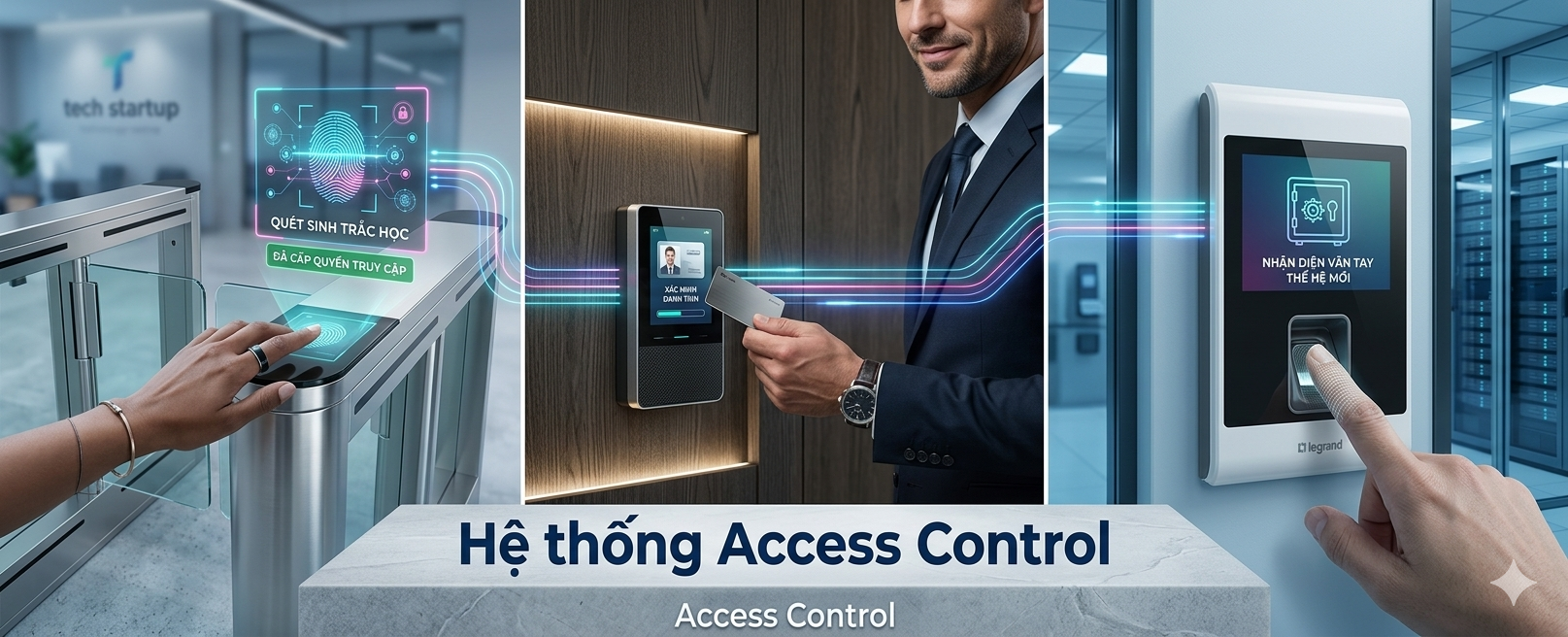
In the context of digital transformation and increasingly sophisticated security threats, Access Control is no longer just about “locking doors” or simply managing entry and exit as it used to be. Instead, modern access systems are evolving into intelligent and flexible security layers, helping users feel safer even within their own homes.
In this article, let’s explore the core technologies as well as the key trends shaping the future of Access Control.
An Access Control System is a security solution designed to manage and regulate the entry and exit of people or vehicles within a specific area (such as buildings, offices, or factories). Its purpose is to ensure that only authorized individuals can access certain resources or spaces.
DAC (Discretionary Access Control)
DAC is a model where access rights are determined by the resource owner. Users can grant or revoke access permissions for others to the data or areas they manage. While this model offers high flexibility and is easy to implement, it can pose security risks if permissions are not properly controlled.
MAC (Mandatory Access Control)
MAC is a model in which all access permissions are defined by a central system or administrator, based on predefined security levels. Users cannot modify permissions on their own. This approach provides a high level of security and is commonly used in strict environments such as military or government systems, but it lacks flexibility.
RBAC (Role-Based Access Control)
RBAC is the most widely used model in enterprises. Access permissions are assigned based on user roles such as administrator, employee, or guest. Instead of assigning permissions to individuals, roles are defined and users are assigned to those roles, making the system easier to manage, consistent, and scalable.
ABAC (Attribute-Based Access Control)
ABAC is a modern model that controls access based on multiple attributes such as user information, time, location, or device. By combining various conditions, ABAC provides high flexibility and precision, making it suitable for complex systems and digital environments like cloud computing and IoT. It is also an emerging trend in next-generation Access Control systems.
Biometric technology in Access Control uses unique biological or behavioral characteristics of individuals to verify identity. Unlike cards or passwords (which can be lost or stolen), biometrics are tied directly to the individual, offering higher security and convenience.
This technology is typically divided into two categories: physical traits and behavioral traits.
Mobile Access allows users to use their smartphones to unlock doors and access secured areas or systems. Smartphones can integrate with Access Control systems via technologies such as Bluetooth, NFC (Near-Field Communication), or Wi-Fi.
Common Mobile Access methods include:
Cloud-based Access Control refers to managing access systems through cloud platforms instead of on-premise servers.
Instead of installing and maintaining complex local infrastructure, organizations can:
Key advantages include:
Cloud technology also plays a crucial role in connecting devices within Smart Building ecosystems.
AI and Machine Learning are taking Access Control to a whole new level.
Beyond simply allowing or denying access, modern systems can:
Access Control is no longer a standalone system but part of a broader IoT ecosystem.
In smart buildings, Access Control can be integrated with:
For example:
This not only enhances security but also improves user experience and operational efficiency.
User interaction with access systems has changed significantly. Instead of using keycards or physical keys, users now expect seamless and contactless experiences.
They can unlock doors using facial recognition, fingerprints, or simply by carrying their smartphones. This trend is driven not only by convenience but also by hygiene and safety concerns, especially after the pandemic.
As convenience increases, so does the demand for stronger security. A single layer of authentication is no longer sufficient to protect against modern threats.
MFA combines multiple factors such as:
This significantly reduces the risk of unauthorized access, even if one factor is compromised.
Another major shift is the integration of security systems.
Previously, Access Control, CCTV, and alarm systems operated independently. Today, organizations are moving toward unified platforms where all systems are integrated.
This provides:
As Access Control systems become more connected to the internet, cloud, and IoT devices, the line between physical security and cybersecurity is fading.
Modern threats include:
Therefore, cybersecurity measures such as Zero Trust models, data encryption, and strong authentication are becoming essential components of modern Access Control systems.
Other news

Signify and KPS sign strategic partnership agreement.
Signify and KPS have signed a strategic partnership to promote smart, energy-efficient lighting solutions for buildings in Vietnam.
View detail

From APEC 2017 Da Nang to APEC 2027 Phu Quoc: From traditional security solutions to smart IOCs.
From APEC 2017 security monitoring solutions to a smart IOC model for APEC 2027 in Phu Quoc.
View detail

Team Building KPS 2026 | Da Nang - Hoi An - Hue
KPS 2026 Team Building journey in Da Nang - Hoi An - Hue, where teams bond, recharge, and spread sustainable values.
View detail

Optimizing air conditioning based on room conditions in hotels and resorts.
Why do 20-30% of hotel rooms still have their air conditioning running even when there are no guests?
View detail

Energy-saving solutions for hotels and resorts - without compromising the experience.
Consulting and implementing EMS systems for hotels - reducing electricity costs, smarter operation - without compromising customer experience.
View detail

Energy Management System (EMS): Cost and Operation Optimization
EMS solutions help businesses monitor, analyze, and optimize energy in real time, saving 10-30% on electricity costs.
View detail
ABOUT KPS


Regulations and policies
Warranty and return policy Delivery, payment, and feedback Giấy phép kinh doanhContact Information
HO CHI MINH OFFICE
10–12 Dong Van Cong Street, Cat Lai Ward, Ho Chi Minh City.
+842839976099 / 903 709 019
info@kps.com.vn
www.kps.com.vn
Work time
Monday – Friday : 8:00 AM - 17:30 PM
Saturday - Sunday: Off
HA NOI OFFICE
22 Alley 168 Nguyen Xien, Khuong Dinh Ward, Hanoi City
+84 903 709 019
kpshn@kps.com.vn
www.kps.com.vn
Work time
Monday – Friday: 8:00 AM - 17:30 PM
Saturday - Sunday: Off
DA NANG OFFICE
490 Nguyen Tri Phuong, Hoa Cuong Ward, Da Nang City
+84 903 709 019
kpsdn@kps.com.vn
www.kps.com.vn
Work time
Monday – Friday: 8:00 AM - 17:30 PM
Saturday - Sunday: Off
CAN THO OFFICE
11/11 Tran Binh Trong, Ninh Kieu Ward, Ninh Kieu District, Can Tho City.
+84 090 709 019
kpsct@kps.com.vn
www.kps.com.vn
Work time
Monday – Friday: 8:00 AM - 17:30 PM
Saturday - Sunday: Off
SERVICE CENTER - WAREHOUSE
10–12 Dong Van Cong Street, Cat Lai Ward, Ho Chi Minh City.
+ 84 28 3997 0609
baohanh@kps.com.vn
www.kps.com.vn
Work time
Monday – Friday: 8:00 AM - 17:30 PM
Saturday - Sunday: Off
2010 © Bản quyền thuộc KPS
Online: 15 | Visitors Counter: 17718044
About | Recruitment | News | Contact Us


.png)


