KPS System Corp | Công ty cổ phần Hệ Thống An Ninh Khai Phát

AI Camera: Future Trends and Breakthrough Applications

In the era of technology explosion, AI Camera is gradually becoming an indispensable trend, bringing breakthrough capabilities. From recognizing faces in seconds to predicting threats before they happen, AI Camera is not only changing the way we monitor but also reshaping the future of security, healthcare, transportation and many other fields. Let's explore in the article below

Overview of AI Camera

What is AI Camera

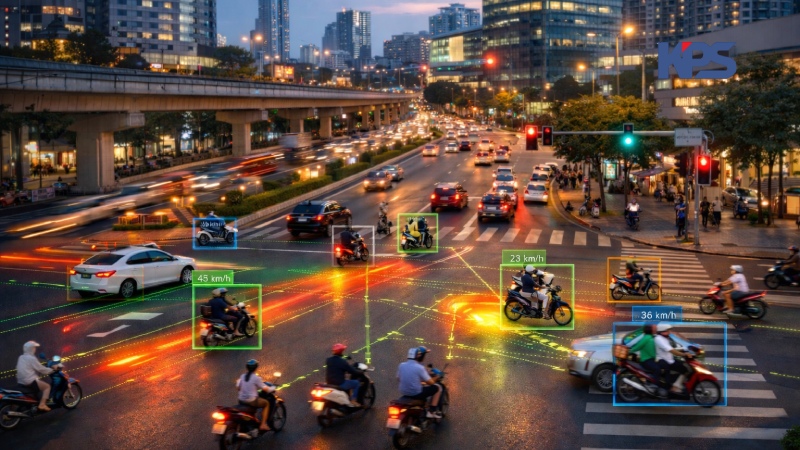
AI Camera (Artificial Intelligence Camera) is a type of camera that is integrated with artificial intelligence (AI) to automatically analyze, recognize and process images/videos in real time. Not only recording images like conventional cameras, AI Camera has the ability to learn, recognize faces, detect objects, analyze behavior and give appropriate warnings or actions

How AI Cameras work

AI Camera uses machine learning algorithms and artificial intelligence (AI) to process image data. How AI Cameras work

  • AI Cameras collect image or video data from the surrounding environment
  • The data is processed through AI algorithms such as Deep Learning and Machine Learning
  • Identify objects, behaviors, faces, license plates, or even predict dangerous situations
  • Based on the analysis, AI Cameras can send warnings, control other devices, or store important information

Outstanding features

  • Facial recognition: Identify identity, access control
  • Behavior analysis: Detect abnormal behavior such as intrusion, leaving objects behind
  • License plate recognition: Manage parking lots, control vehicles
  • Crowd detection: Warn when there are large gatherings (airports, banks, ...)
  • Object classification: Identify people, vehicles, dangerous objects
  • Intrusion warning: Detect strangers entering restricted areas and send notifications immediately
  • Auto-zoom & target tracking: The camera automatically adjusts the focus when detecting a suspicious object

The importance of artificial intelligence (AI) in the camera industry

Artificial intelligence (AI) is revolutionizing the surveillance camera industry by improving the ability to analyze, monitor and secure. Instead of just recording like traditional cameras, AI cameras can recognize, analyze and give intelligent warnings, helping to improve monitoring performance and minimize security risks

Real-time incident detection

  • AI cameras can detect and warn immediately when incidents such as illegal intrusion, fire, or accidents occur
  • Thanks to its fast analysis capabilities, AI helps to reduce the time from incident detection to response action

Accurate object recognition

  • AI can recognize the faces of specific objects, assisting in tracking criminals or managing access
  • Distinguish between people, animals, vehicles, and other objects, reducing false alarms
  • Track specific objects in the surveillance area

Analyze abnormal behavior

  • AI can recognize abnormal behaviors such as intrusions, theft, or other dangerous situations
  • Analyze data to predict possible situations, helping to prevent incidents before they occur

Automate the surveillance process

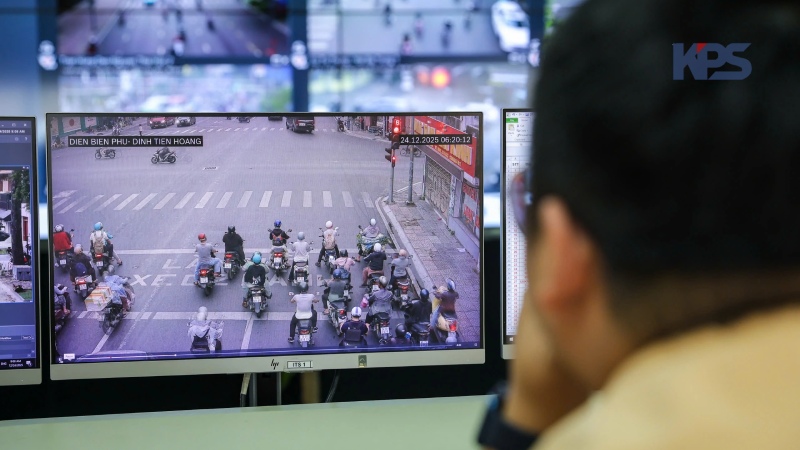
  • AI cameras can operate 24/7 without rest, ensuring continuous monitoring
  • AI automatically records and stores important events, making them easy to retrieve when needed

Additional benefits

  • Reduce false alarm rates
  • Support investigation and analysis
  • Integrate with other systems
  • Data security

AI Camera components

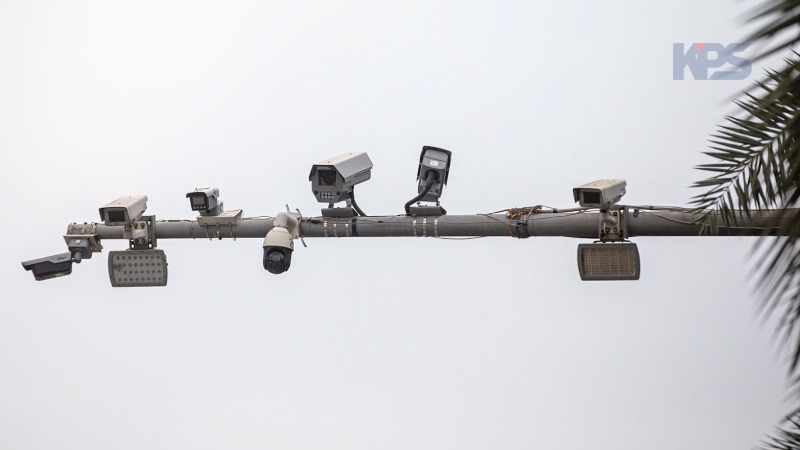
AI cameras are a combination of traditional camera hardware and advanced artificial intelligence (AI) technologies. Here are the main components of an AI camera system

Hardware

  • Image sensor: Captures light and converts it into electronic signals to create an image. Common sensor types: CMOS, CCD
  • Lens: Determines image quality, viewing angle, and zoom capabilities. Can be a fixed lens or an optical zoom lens
  • Processor: Processes image and video data. Dedicated processors such as DSPs or AI-integrated SoCs
  • Memory: Temporary or long-term data storage. Includes RAM (for fast processing) and flash memory (for video storage)
  • Network connection: Supports Internet connection via Wi-Fi, Ethernet, or 4G/5G. Allows data transmission to the cloud or remote control
  • Auxiliary sensors: Motion sensor (PIR), sound sensor, temperature sensor, ... Support event detection and recording activation

Software

  • AI algorithms: Deep learning and Machine learning algorithms for image and video analysis (face recognition, object detection, behavior analysis, ...)
  • Operating system: Supports running AI applications and hardware management. (Linux, Android, or custom operating system)
  • User interface: Allows users to configure, review videos, and receive alerts. Can be mobile, web, or desktop software

Compare AI Camera with traditional camera

COMPARISON TABLE: AI CAMERA VS. TRADITIONAL CAMERA

Criteria Traditional Camera AI Camera
Image Processing Captures images/videos only, no content analysis. Real-time image analysis, object recognition.
Artificial Intelligence (AI) Human-monitored (no AI). Uses AI for facial recognition, license plate detection, and object identification.
Detection & Alerts Only detects basic motion, prone to false alarms. Recognizes abnormal behavior, provides more accurate alerts.
Response Speed Depends on human monitoring. Instant response, real-time alerts.
Learning Capability No learning capability. Learns from data to improve accuracy over time.
Connectivity & Storage Local storage (memory card, hard drive), risk of data loss. Supports cloud storage, remote data access.
Application Basic surveillance for homes and small areas. Used for smart homes, smart cities, and high-security applications.
Data Security Low security, vulnerable without encryption. Uses data encryption, higher security.
Cost Low cost, suitable for basic needs. Higher cost due to AI integration and advanced technology.

Breakthrough Applications of AI Cameras

AI cameras are revolutionizing various industries, offering superior efficiency compared to traditional cameras. Below are some key applications:

Security & Surveillance

  • Accurately recognize faces, license plates, objects, and even human behaviors to detect intrusions, track criminals, and manage access efficiently.
  • Identify unusual activities such as fights, theft, and break-ins, automatically alerting security personnel.
  • Auto-track targets, zoom in on suspicious areas, reducing human intervention.
  • Monitor foot traffic in public areas (airports, shopping malls, etc.).

Retail & Marketing

  • Analyze customers' age, gender, and emotions to help businesses understand their target audience and optimize marketing strategies.
  • Recognize VIP customers, automatically greet them, and guide them to relevant sections.
  • Manage inventory, automate stock checks, detect out-of-stock items, and identify misplaced products.

Transportation

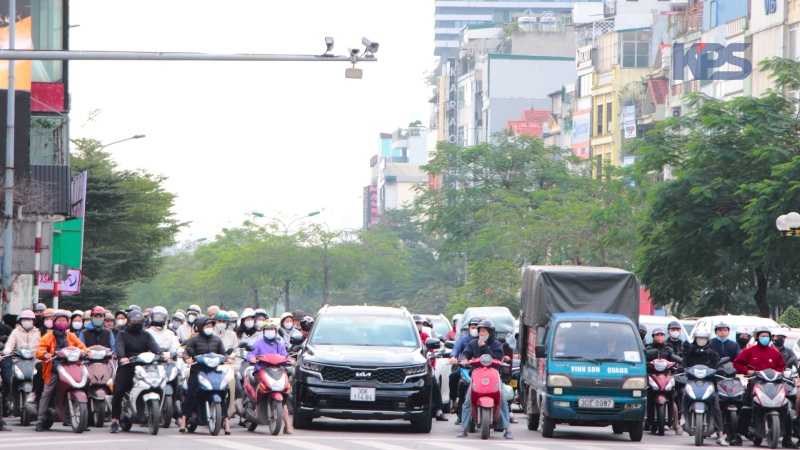
  • Smart Traffic Lights: Analyze traffic flow and adjust signals dynamically to reduce congestion.
  • Violation Detection: Identify red light running, wrong-way driving, overspeeding, and automatically issue fines.
  • Safety Features: Detect hazards, assist with parking, and enable automatic emergency braking.

Healthcare & Medical Applications

  • Diagnosis Assistance: AI cameras can analyze medical images like X-rays, MRIs, and CT scans to support accurate diagnoses.
  • Patient Monitoring: Detect patient falls, seizures, and automatically alert medical staff.
  • Robotic Surgery: Integrated into robotic systems to assist surgeons with precise and safer operations.

Smart Agriculture

  • Crop & Livestock Monitoring: Track plant growth, detect pests, and monitor livestock health.
  • Automated Farming: Control automated irrigation, fertilization, and harvesting systems.

Entertainment & Media

  • VR & AR Experiences: Enhance immersive virtual and augmented reality interactions.
  • Facial & Gesture Recognition: Used in gaming, filmmaking, and live streaming.

Future Trends in AI Cameras

Enhanced AI & Machine Learning (ML)

  • Algorithm Improvement:

    • Developing new AI models like Deep Learning, Reinforcement Learning, and GANs to tackle complex problems.
    • Optimizing models to reduce computational requirements while maintaining accuracy.
    • Applying AI in robotics, automation, and gaming for adaptive learning.
  • Training Data Enhancement:

    • Collecting high-quality, diverse datasets to improve AI performance.
    • Using GANs to generate synthetic training data when real-world data is insufficient.
    • Implementing data preprocessing techniques (noise removal, normalization, handling missing data) to refine model accuracy.
  • Advanced Hardware Utilization:

    • Leveraging powerful GPUs and AI-specific chips to accelerate processing.
    • Integrating AI into edge devices to reduce latency and increase efficiency.

Integration with IoT & Smart Cities

The fusion of AI (Artificial Intelligence), IoT (Internet of Things), and Smart Cities is transforming urban management, improving quality of life, and optimizing resources. Key applications include:

Smart Traffic Monitoring

  • Recognizing license plates even in poor weather or fast-moving traffic.
  • Integrating with automated ticketing systems to detect violations like red-light running and speeding.
  • Real-time traffic flow analysis to adjust signals and reduce congestion.
  • IoT-connected cameras and sensors detecting traffic jams and suggesting alternative routes.
  • Smart parking solutions using IoT sensors to identify available parking spots and assist in navigation.

Urban Security & Crowd Management

  • Crime Detection: AI cameras can identify suspicious behavior, accidents, or legal violations and send real-time alerts to authorities.
  • Disaster Prevention: AI and IoT can detect fires, floods, and other emergencies.
  • Crowd Control: AI analyzes crowd density at events, preventing stampedes and ensuring public safety.

Environmental & Energy Monitoring

  • Air Quality Monitoring: IoT sensors collect pollution data, and AI analyzes it to provide alerts or solutions.
  • Smart Waste Management: IoT sensors notify when bins are full, optimizing waste collection routes.
  • Water Quality Monitoring: IoT detects contamination in rivers and water supplies, with AI identifying pollution sources.
  • Energy Optimization: AI adjusts lighting, heating, and cooling based on real-time occupancy data to reduce energy waste.

Healthcare & Smart Medical Services

  • Remote Health Monitoring: IoT devices track vital signs, and AI analyzes data for early disease detection.
  • Emergency Response: AI systems can detect strokes or heart attacks and automatically alert emergency responders.
  • Hospital Resource Management: IoT helps monitor medical equipment and manage medicine stocks efficiently.

Smart Urban Planning & Public Services

  • AI-driven urban planning: Simulates urban development scenarios to guide infrastructure projects.
  • IoT-based public service optimization: Monitors and maintains public assets like bridges, streetlights, and parks using predictive AI analytics.
  • Automated administrative processes: AI enhances online public services, reducing wait times and improving efficiency.

Big Data Analytics

Big Data analytics is a critical technology shaping the digital era. Key trends include:

  • AI & ML for Automated Insights: AI-driven analytics streamlines data collection, cleaning, and predictive modeling.
  • Real-time Data Processing: AI enables instant analysis, allowing quick decision-making.
  • Unstructured Data Analysis: AI processes text, images, videos, and audio for deeper insights.
  • Edge Analytics: Processes data on IoT devices to reduce response time and cloud reliance.
  • Data Privacy & Security Enhancements: AI ensures data protection through advanced encryption and compliance monitoring.

Integration with Cloud & Edge Computing

The convergence of Cloud Computing and Edge Computing enhances real-time AI applications by:

  • Reducing Latency: Edge computing processes data locally, eliminating cloud delays.
  • Bandwidth Optimization: Only essential data is sent to the cloud, reducing network congestion.
  • Enhanced Security: Sensitive data remains at the edge, lowering exposure to cyber threats.
  • Scalability: Cloud services provide limitless expansion, while edge computing ensures local efficiency.

Integration with 5G Technology

5G + AI + IoT is paving the way for a hyper-connected world, enabling:

  • Ultra-Fast Data Transmission: Supports large-scale data transfer in minimal time.
  • Low Latency: Enables real-time applications like autonomous vehicles and remote surgery.
  • Massive IoT Connectivity: Supports millions of interconnected smart devices.
  • Energy Efficiency: Enhances IoT device performance while extending battery life.

Challenges and Solutions for AI Cameras

Privacy and Data Security Issues

Privacy Invasion

  • AI cameras collect and process large amounts of image data, which may contain sensitive personal information.
  • The risk of excessive surveillance may affect individual freedom.

Data Security

  • Image and video data can be stolen, leaked, or misused.
  • AI camera systems are vulnerable to cyberattacks.

Legal Compliance

  • Privacy and security regulations (such as GDPR, CCPA) impose strict requirements on data collection, storage, and usage.
  • Non-compliance can result in severe penalties and loss of user trust.

Deployment Costs and Performance Efficiency

High Initial Investment Costs

  • Purchasing and installing AI cameras, along with related infrastructure (such as servers, software, and network systems), can be costly.
  • Maintenance, upgrades, and operational costs are also significant.

Performance Efficiency

  • AI cameras process large volumes of image and video data, requiring powerful computing resources.
  • Data processing delays may impact system effectiveness.
  • False positive and false negative rates may reduce system reliability.

Solutions and Future Directions

  • For privacy and data security issues, future directions will focus on blockchain technology, secure AI, privacy-by-design approaches, and international collaboration.
  • For deployment costs and performance efficiency, future advancements will include AI automation, quantum technology, self-learning systems, and resource-sharing collaborations.

KPS - A Trusted Partner in Distributing Leading AI Camera Systems

KPS is proud to be an official distributor of AI camera systems from top global brands such as CNB, i-PRO, and Bosch. With extensive experience and a team of highly skilled experts, we are committed to delivering cutting-edge technology solutions to meet security surveillance, management, and operational needs.

At KPS, we not only provide high-quality products but also support our customers throughout the entire process—from consultation and design to implementation and after-sales service. Let KPS be your strategic partner in building a comprehensive AI camera system, optimizing performance, and safeguarding business assets.

Contact KPS now for expert consultation and experience world-class AI camera solutions!

FAQs - Frequently Asked Questions

Can AI cameras completely replace human security monitoring?
No, AI cameras cannot entirely replace human security monitoring, but they can serve as a powerful tool to enhance efficiency and reduce reliance on human operators.

Why can AI cameras not fully replace humans?

Accuracy Limitations

  • AI cameras may produce false positives or false negatives, especially in complex conditions such as low light, bad weather, or unfavorable angles.
  • AI struggles to fully understand context or human intentions.

Handling Complex Situations

  • Humans can assess and respond flexibly to unpredictable or unscripted scenarios.
  • Ethical concerns arise in AI surveillance, including privacy and fairness issues.

In scenarios requiring direct interaction, humans remain irreplaceable.

Are AI cameras secure for user data?
Yes, AI cameras can secure user data, but this depends on implementation, the technology used, and provider security policies.

If not properly managed, user data may be at risk of leaks or misuse.

Do AI cameras require an internet connection to function?
No, AI cameras do not necessarily need an internet connection, but connectivity enhances their capabilities and features. AI cameras can operate offline or online depending on usage needs.

Offline AI Camera Operations

  • Processes data locally on-device using integrated AI chips and smart software.
  • Stores data on memory cards or local storage devices.

Online AI Camera Operations

  • Connects to the internet to upload data to cloud platforms or central management systems.
  • Users can access and manage cameras remotely via mobile apps or web interfaces.

Stay updated with the latest news on our Fanpage: KPS SYSTEM CORP.


Other news

What is Lane Departure Warning System (LDWS)? How it works & practical benefits

What is Lane Departure Warning System (LDWS)? How it works & practical benefits

LDWS is a lane departure warning system that uses a front-facing camera to detect lane markings. When the vehicle unintentionally drifts out of its lane without the turn signal..

View detail

AI Camera & Zero Trust Security Vietnam 2025 Conference

AI Camera & Zero Trust Security Vietnam 2025 Conference

The AI ​​Camera & Zero Trust Security 2025 conference provides a space for in-depth exchange and connection of smart security solutions for the future.”

View detail

MES System | The Role of MES in Smart Manufacturing

MES System | The Role of MES in Smart Manufacturing

MES manages real-time production, optimizes quality, productivity, connects ERP, SCADA & IoT for factory 4.0.

View detail

Blockchain Technology: A Revolutionary Solution for the Digital Future in the AI ​​Era

Blockchain Technology: A Revolutionary Solution for the Digital Future in the AI ​​Era

Blockchain is a distributed ledger. Instead of storing data on a central server (like a bank or Facebook), blockchain stores data on thousands of computers in a network.

View detail

Security Monitoring Solutions for Data Center

Security Monitoring Solutions for Data Center

A Data Center (DC) is the central location that houses all servers, storage systems, and mission-critical infrastructure of an organization. Even a minor incident — power loss,..

View detail

KPS accompanies Gia Dinh University at the Workshop: AI Everywhere

KPS accompanies Gia Dinh University at the Workshop: AI Everywhere

KPS and Gia Dinh University organized the Workshop "AI Everywhere", sharing AI applications from experts from CNB, Seagate, Mitel, inspiring technology for Gen Z.

View detail

LEGO Binh Duong Factory | Zero-Emission Factory in Vietnam

LEGO Binh Duong Factory | Zero-Emission Factory in Vietnam

LEGO Binh Duong Factory - a 1.3 billion USD FDI project that meets Carbon Neutral standards, a symbol of green and high-tech production in Vietnam.

View detail

1 2 3 4 5
Công ty cổ phần Hệ Thống An Ninh Khai Phát (gọi tắt là Công ty KPS). GPDKKD: 0310471658 do sở KH & ĐT TP.HCM cấp ngày 24/11/2010. Đại diện pháp luật: Đinh Tấn Đạt.

2010 © Bản quyền thuộc KPS

Online: 21 | Visitors Counter: 13466333

About | Recruitment | News | Contact Us

zalo
messenger