


info@kps.com.vn
+84 903 709 019
In an increasingly competitive market where the demand for logistics services is growing, optimizing transportation processes has become a decisive factor for a company's success. The Transportation Management System (TMS) emerges as an effective solution to help businesses manage and optimize freight transportation activities. This article will explore the benefits that a TMS offers—let's dive into the details below.
A Transportation Management System (TMS) is software designed to optimize and manage the entire freight transportation process, from planning to final delivery. TMS helps transport, logistics, and large-scale manufacturing companies effectively oversee transportation-related activities, thereby reducing costs, improving efficiency, and enhancing customer service.
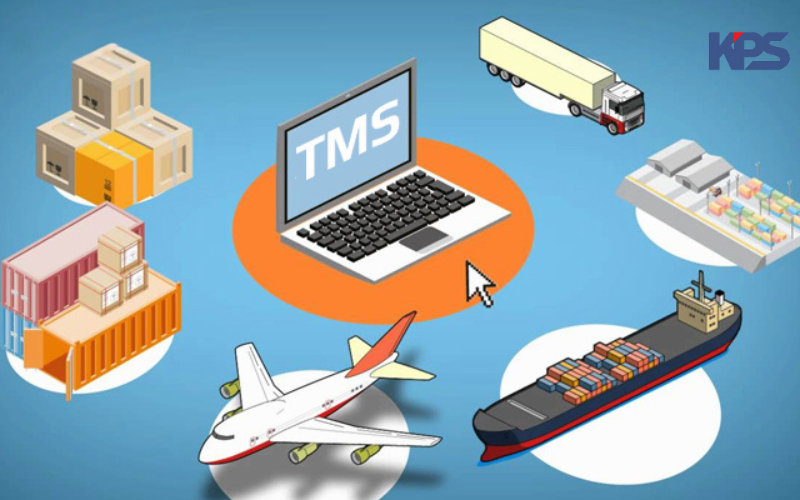
A Transportation Management System (TMS) plays a critical role in the supply chain, optimizing the process of transporting goods from origin to destination. TMS operates through a series of steps and technologies to ensure that goods are delivered efficiently and cost-effectively.
Data Collection and Analysis:
First, TMS collects and analyzes data from various sources, including order details, transportation routes, and vehicle types. Based on this data, the system can plan optimal transportation routes, select suitable vehicles, and determine accurate delivery schedules. This not only saves time but also minimizes transportation costs.
Real-Time Monitoring:
Next, TMS provides real-time tracking and monitoring of the transportation process. Managers can monitor the location of goods, delivery status, and any incidents that occur during transportation. This feature enhances the ability to respond quickly to issues and ensures goods are delivered on time.
Performance Reporting and Analysis:
Finally, TMS offers detailed reports and analytics on transportation performance. Users can review metrics such as transportation costs, delivery times, and the performance of service providers. This information helps businesses make more strategic decisions to optimize logistics processes and improve customer service.
A Transportation Management System (TMS) provides numerous advantages for businesses in managing and optimizing transportation processes. Here are some key benefits:
Enhanced Operational Efficiency
TMS automates tasks such as route planning, shipment tracking, and order management, reducing processing time and increasing accuracy in delivery operations.
Reduced Transportation Costs
By analyzing various transportation options, TMS enables businesses to select the most cost-effective solutions. Optimizing routes and minimizing travel distances also reduce fuel consumption and associated costs.
Improved Customer Experience
With TMS, businesses can provide accurate and timely updates to customers regarding order status and delivery times. This not only enhances customer satisfaction but also builds trust and long-term relationships.
Better Decision-Making
TMS offers detailed reports and data analytics, giving managers deeper insights into transportation performance. By tracking key metrics, businesses can make smarter decisions regarding transportation strategies and process improvements.
Integration with Other Systems
TMS can integrate with warehouse management systems (WMS), ERP platforms, and other supply chain systems. This integration creates a seamless workflow, reduces errors, and improves coordination between departments.
Enhanced Security and Risk Management
TMS helps track and manage risks related to transportation, including cargo loss, accidents, and other incidents. The system can also provide security measures and monitoring to safeguard goods during transit.
A Transportation Management System (TMS) is a powerful tool that helps businesses optimize transportation processes, reduce costs, and enhance efficiency. TMS incorporates a variety of useful features to manage the entire transportation lifecycle effectively. Below are the key features of TMS:
Transportation Planning
Warehouse Management
Tracking and Monitoring
Asset Management
Reporting and Analytics
Integration
A Transportation Management System (TMS) plays a crucial role in optimizing the logistics processes of businesses. Below are several ways in which TMS can help improve logistics efficiency:
1. Enhancing Transportation Planning
TMS automates the transportation planning process, enabling businesses to determine optimal routes and suitable vehicles. This not only saves time but also minimizes transportation costs.
2. Reducing Transportation Costs
With data analysis and route optimization capabilities, TMS helps businesses lower transportation expenses. The system can compare the pricing of various service providers and select the most cost-effective solution.
3. Strengthening Tracking and Monitoring
TMS offers real-time tracking of orders and shipments. Businesses can monitor the location and status of goods, improving customer service and reducing the risk of losses.
4. Improving Warehouse Management
A TMS can integrate with Warehouse Management Systems (WMS) to optimize storage and outbound processes. This integration reduces waiting times and enhances warehouse productivity.
5. Enhancing Customer Service
By providing accurate and timely information about order status, TMS improves customer experience. Customers can receive updates on delivery times, fostering trust and satisfaction.
6. Data Analysis and Reporting
TMS provides powerful analytics and reporting tools, enabling businesses to assess transportation performance and make strategic decisions. This data can be used to streamline processes and optimize costs in the future.

A Transportation Management System (TMS) is a tool designed to optimize transportation processes and logistics management. In the logistics sector, TMS offers numerous practical applications, including:
TMS supports transportation planning by calculating the shortest or most efficient routes, helping to reduce fuel costs and transportation time. Additionally, the system optimizes load management by arranging goods efficiently, maximizing vehicle space utilization, and minimizing the number of trips required.
TMS integrates GPS technology to track the location and status of vehicles in real time, enabling businesses to monitor fleet performance effectively. It also manages maintenance schedules, ensuring vehicles remain in good condition, reducing the risk of breakdowns, and extending vehicle lifespan.
The system provides real-time order status updates, allowing both businesses and customers to track shipments at any time. TMS minimizes the risk of lost items through precise management of individual packages and transportation routes.
TMS helps businesses calculate end-to-end transportation costs and provides accurate cost forecasts. The system also compares pricing and services from various carriers, enabling the selection of the most cost-effective options.
By collecting and analyzing transportation data, TMS generates detailed reports to optimize logistics processes. The system automates many manual tasks, such as transportation planning and order processing, saving time and effort.
TMS can integrate with other systems, such as ERP (Enterprise Resource Planning) or WMS (Warehouse Management System), to create a synchronized supply chain. It also facilitates communication and coordination among stakeholders, including suppliers, carriers, and customers.
TMS assists businesses in managing transportation-related documents to ensure compliance with legal regulations for traffic and import/export activities. The system also provides detailed records to meet audit or reporting requirements.
With TMS, customers can access accurate Estimated Time of Arrival (ETA) through real-time tracking features. The system supports flexible delivery options, such as expedited shipping or fixed time slots, improving customer satisfaction.
Challenge:
The cost of purchasing, implementing, and maintaining a TMS can be high, especially for small or medium-sized businesses. Additional investments in hardware, software, and employee training are also required.
Solution:
2. Integration with Existing Systems
Challenge:
Businesses need to integrate TMS with other systems such as ERP, WMS, or CRM. This process can be complex, time-consuming, and prone to data errors.
Solution:
3. Employee Training and Adoption
Challenge:
Employees may struggle to adapt to the new system, especially if they are accustomed to traditional management methods.
Solution:
4. Data Quality
Challenge:
TMS relies heavily on accurate data (e.g., orders, routes, costs). Poor-quality input data can lead to incorrect decisions.
Solution:
5. Scalability
Challenge:
Many businesses fail to account for the need to scale the system as they grow, leading to reduced performance or the need to replace the TMS.
Solution:
6. Compliance and Security
Challenge:
Managing legal requirements for transportation, especially in international transactions, while ensuring the security of business and customer data.
Solution:
Other news

Signify and KPS sign strategic partnership agreement.
Signify and KPS have signed a strategic partnership to promote smart, energy-efficient lighting solutions for buildings in Vietnam.
View detail

From APEC 2017 Da Nang to APEC 2027 Phu Quoc: From traditional security solutions to smart IOCs.
From APEC 2017 security monitoring solutions to a smart IOC model for APEC 2027 in Phu Quoc.
View detail

Team Building KPS 2026 | Da Nang - Hoi An - Hue
KPS 2026 Team Building journey in Da Nang - Hoi An - Hue, where teams bond, recharge, and spread sustainable values.
View detail

Optimizing air conditioning based on room conditions in hotels and resorts.
Why do 20-30% of hotel rooms still have their air conditioning running even when there are no guests?
View detail

Energy-saving solutions for hotels and resorts - without compromising the experience.
Consulting and implementing EMS systems for hotels - reducing electricity costs, smarter operation - without compromising customer experience.
View detail

Energy Management System (EMS): Cost and Operation Optimization
EMS solutions help businesses monitor, analyze, and optimize energy in real time, saving 10-30% on electricity costs.
View detail
ABOUT KPS


Regulations and policies
Warranty and return policy Delivery, payment, and feedback Giấy phép kinh doanhContact Information
HO CHI MINH OFFICE
10–12 Dong Van Cong Street, Cat Lai Ward, Ho Chi Minh City.
+842839976099 / 903 709 019
info@kps.com.vn
www.kps.com.vn
Work time
Monday – Friday : 8:00 AM - 17:30 PM
Saturday - Sunday: Off
HA NOI OFFICE
22 Alley 168 Nguyen Xien, Khuong Dinh Ward, Hanoi City
+84 903 709 019
kpshn@kps.com.vn
www.kps.com.vn
Work time
Monday – Friday: 8:00 AM - 17:30 PM
Saturday - Sunday: Off
DA NANG OFFICE
490 Nguyen Tri Phuong, Hoa Cuong Ward, Da Nang City
+84 903 709 019
kpsdn@kps.com.vn
www.kps.com.vn
Work time
Monday – Friday: 8:00 AM - 17:30 PM
Saturday - Sunday: Off
CAN THO OFFICE
11/11 Tran Binh Trong, Ninh Kieu Ward, Ninh Kieu District, Can Tho City.
+84 090 709 019
kpsct@kps.com.vn
www.kps.com.vn
Work time
Monday – Friday: 8:00 AM - 17:30 PM
Saturday - Sunday: Off
SERVICE CENTER - WAREHOUSE
10–12 Dong Van Cong Street, Cat Lai Ward, Ho Chi Minh City.
+ 84 28 3997 0609
baohanh@kps.com.vn
www.kps.com.vn
Work time
Monday – Friday: 8:00 AM - 17:30 PM
Saturday - Sunday: Off
2010 © Bản quyền thuộc KPS
Online: 46 | Visitors Counter: 17308025
About | Recruitment | News | Contact Us


.png)


