KPS System Corp | Công ty cổ phần Hệ Thống An Ninh Khai Phát

Electrical Contractor - Electrical Design and Construction

What is low voltage?

Low voltage (or low voltage system) is a common term in the field of construction and electromechanical, an electrical system that serves the purposes of monitoring, serving the management and operation of buildings and works, helping to bring many benefits to users. The voltage used in the low voltage system is often very low compared to the main electrical system to ensure safety for users and equipment. Commonly used voltages are 12V, 24V, or 48V.

According to international standards:

  • AC voltage is usually not more than 35V.
  • DC voltage is usually not more than 60V.

Distinguishing between heavy and light electricity

Concept

  • Heavy electricity is an electrical system used to supply and transmit energy to large capacity electrical equipment such as: lighting, machinery, air conditioners, elevators, and other large energy consuming devices.
  • Low voltage is an electrical system that serves devices related to communication, control, security, monitoring, and communications.

Voltage

  • High voltage usually uses high voltage from 220V - 380V, or higher in industrial applications.
  • Low voltage uses low voltage, usually below 50V.

Applications of low voltage in life

Some common applications of low voltage in life:
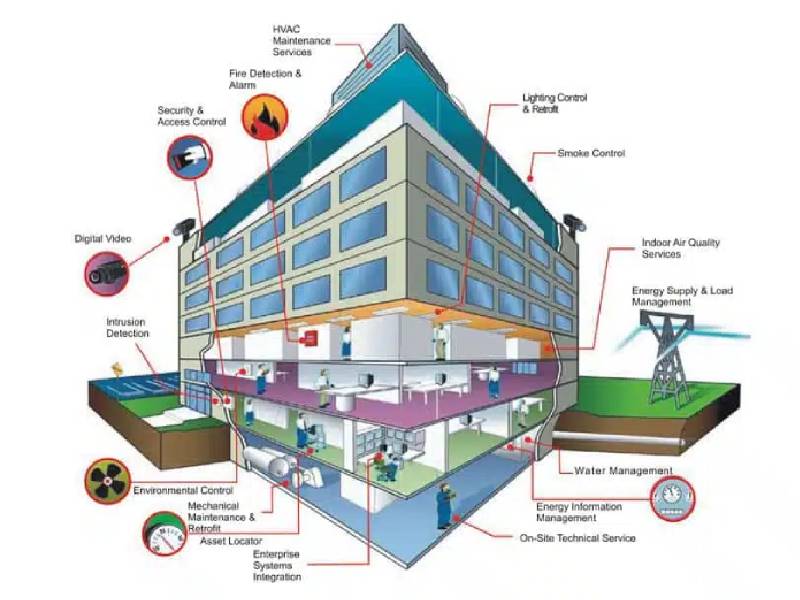
  • Surveillance camera systems help monitor, protect security, record event images to ensure safety for people and property.
  • Fire alarm systems help detect smoke, fire and give warnings of fire and explosion risks, minimizing damage and protecting human life.
  • Public address systems (PA) are used to make general announcements in buildings, airports, shopping malls, and train stations.
  • Access control systems use magnetic cards, fingerprints, or passwords to control access to areas such as office buildings, hotels, and schools to ensure security and prevent unauthorized people from accessing important areas.
  • The intercom system provides power for internal communication systems, allowing people in the building to contact each other or the building management center.
  • The network infrastructure system provides power to network devices such as cameras, VoIP phones, switches, routers, and hubs to ensure a safe and stable power supply, optimizing installation, operation, and maintenance.
  • The BMS system integrates with other systems in the building such as lighting systems, HVAC systems, EMS systems, security, and fire alarms to link and operate synchronously, thereby increasing the efficiency of management and resource use.

Low voltage electrical construction

Low voltage electrical construction is the process of installing low voltage electrical systems in projects such as office buildings, houses, factories, hotels, shopping centers, etc. This process requires precision and high professional skills to ensure the system operates stably, safely, and effectively. Below are the construction standards and low voltage electrical construction processes.

Low voltage electrical construction standards
Main standards:

Vietnam Standard TCVN 7447 stipulates the basic principles, assessment of general characteristics, definition, selection and installation of electrical equipment, etc.
International standard IEC 60364 on electrical installation systems.
Below are some other standards depending on the type of low voltage electrical system, additional specialized standards may be applied:

Cable and network system standards

  • The international standard TIA/EIA-568 on cabling and connection systems for telecommunications networks, including: twisted pair (UTP) cables, fiber optic cables and connectors. This standard requires cable performance, maximum distances and cable system layout.
  • The ISO/IEC 11801 standard is related to telecommunications cabling systems, cable types, connectors and testing methods.
  • The ANSI/TIA-942 standard is specifically for network infrastructure in data centers, regulating the design, cable structure and system protection.

Electrical safety standards

  • The NFPA 70 (NEC) standard specifies how to safely install electrical systems to minimize the risk of fire and accidents.
  • IEC 60364 specifies low voltage electrical installations, including extra-low voltage, to ensure the safety of users and systems.

Standards for security and surveillance systems

  • International standard IEC 62676 for CCTV systems requires the design, installation, maintenance and operation of security camera systems.
  • European standard BS EN 50132 for video surveillance systems, helping to ensure effective monitoring and security protection for buildings.
  • American standard NFPA 72 for fire alarm systems, detailing the design, installation and maintenance of fire alarm equipment, including smoke detectors, alarm bells and fire detection systems.

Standards for access control systems

  • BS EN 60839 for technical requirements for the installation of card readers, electronic locks and access control systems.
  • ISO/IEC 27001 specifies security measures and information systems management, data protection and access rights in access control systems.
  • PA system standards
  • IEC 60268 specifies audio equipment such as loudspeaker systems, microphones and amplifiers, to ensure sound quality and system reliability.
  • NFPA 72 provides guidance

PA System Standards

  • IEC 60268 specifies audio equipment such as loudspeakers, microphones and amplifiers to ensure sound quality and system reliability.
  • NFPA 72 provides guidance on emergency announcement sound systems in buildings.

Light electrical construction process

  • Survey, plan, design and prepare light electrical systems
  • Survey and measure, evaluate factors such as: space size, location of sockets, switches, electrical equipment, water pipes, etc.
  • Based on actual measurement data, proceed to create a light electrical design drawing.
  • Then make a construction plan based on the design drawing, make a detailed plan of work, materials, human resources, and construction time.

Installing electrical conduit

  • In-wall electrical conduit: determine the location and length of the required electrical conduit based on the designed electrical diagram, then mark, chisel the wall, thread the conduit, and fix the conduit with specialized accessories.
  • Installing electrical conduit under the floor requires careful calculation to ensure that the electrical system is both safe and stable, ensuring that it does not affect the structure of the floor and other systems in the building.
  • Cable tray: install the cable tray Based on the technical drawing, determine the location of the cable tray installation. Determine the length, width, and style of the cable tray to be used.

Pulling the wire

  • Clearing the conduit: use specialized tools to clear the conduit.
  • Pulling the wire: pull the wire into the conduit, ensuring that it is not broken or twisted.

Installing equipment

  • Sockets, switches: install sockets and switches into the concealed or exposed boxes.
  • Electrical cabinets: install electrical cabinets, distribute electricity to electrical circuits in the house.
  • Lighting equipment: install lamps, lamp holders, and other lighting equipment.
  • Some other devices such as: doorbells, sensors, cameras...

Connection

  • Wiring: Connect the wires together and to the electrical equipment according to the design diagram.
  • Check: Recheck the connections to ensure they are secure

Completion

  • Clean and tidy up the construction area.

Acceptance

  • Check the entire electrical system for aesthetics, safety, and stability.
  • Acceptance, handover of the project and instructions for use to the homeowner.


Refer to the article: How to check and accept the low voltage electrical system after construction

Light electrical contractor

To ensure the quality of the light electrical construction, we should choose a reputable construction unit, choose units with experience, professional technical team, and full operating license.

KPS - Low Voltage Electrical Distributor

In Vietnam, KPS is the official distributor of Legrand. We provide Legrand electrical and low voltage equipment, including: cable systems, sockets, racks, electrical cabinets and provide total solutions from Legrand for construction and infrastructure projects. We are committed to always providing genuine Legrand products, products imported directly from the manufacturer and with full documentation, accompanied by warranty services and technical support according to international standards.


To get the latest, most detailed and accurate electrical construction quote, please contact us here:

Update the latest news on Fanpage: KPS System Corp


Câu hỏi thờng gặp

Chi phí đầu tư hệ thống ELV chiếm bao nhiêu % tổng chi phí xây dựng?
Thông thường chiếm khoảng 5–15% chi phí MEP (tùy quy mô và mức độ tích hợp). Đối với công trình Smart Building hoặc các nhà máy yêu cầu cao về bảo mật và tự động hóa, có thể cao hơn.
Có thể sử dụng thiết bị ELV từ nhiều hãng khác nhau không?
Có, nhưng cần đảm bảo sự tương thích và tuân theo giao thức chung (ONVIF cho camera, SIP cho intercom, BACnet/MODBUS cho BMS…). Việc chọn nhà tích hợp hệ thống có kinh nghiệm rất quan trọng.
Có thể giám sát, điều khiển các hệ thống ELV qua BMS hoặc nền tảng IoT không?
Có. Các hệ thống ELV có thể giám sát, điều khiển qua BMS hoặc nền tảng IoT nhờ các giao thức như Modbus, BACnet, KNX,... giúp vận hành tập trung, cảnh báo sớm và quản lý từ xa.

Other news

What is Lane Departure Warning System (LDWS)? How it works & practical benefits

What is Lane Departure Warning System (LDWS)? How it works & practical benefits

LDWS is a lane departure warning system that uses a front-facing camera to detect lane markings. When the vehicle unintentionally drifts out of its lane without the turn signal..

View detail

AI Camera & Zero Trust Security Vietnam 2025 Conference

AI Camera & Zero Trust Security Vietnam 2025 Conference

The AI ​​Camera & Zero Trust Security 2025 conference provides a space for in-depth exchange and connection of smart security solutions for the future.”

View detail

MES System | The Role of MES in Smart Manufacturing

MES System | The Role of MES in Smart Manufacturing

MES manages real-time production, optimizes quality, productivity, connects ERP, SCADA & IoT for factory 4.0.

View detail

Blockchain Technology: A Revolutionary Solution for the Digital Future in the AI ​​Era

Blockchain Technology: A Revolutionary Solution for the Digital Future in the AI ​​Era

Blockchain is a distributed ledger. Instead of storing data on a central server (like a bank or Facebook), blockchain stores data on thousands of computers in a network.

View detail

Security Monitoring Solutions for Data Center

Security Monitoring Solutions for Data Center

A Data Center (DC) is the central location that houses all servers, storage systems, and mission-critical infrastructure of an organization. Even a minor incident — power loss,..

View detail

KPS accompanies Gia Dinh University at the Workshop: AI Everywhere

KPS accompanies Gia Dinh University at the Workshop: AI Everywhere

KPS and Gia Dinh University organized the Workshop "AI Everywhere", sharing AI applications from experts from CNB, Seagate, Mitel, inspiring technology for Gen Z.

View detail

LEGO Binh Duong Factory | Zero-Emission Factory in Vietnam

LEGO Binh Duong Factory | Zero-Emission Factory in Vietnam

LEGO Binh Duong Factory - a 1.3 billion USD FDI project that meets Carbon Neutral standards, a symbol of green and high-tech production in Vietnam.

View detail

1 2 3 4 5
Công ty cổ phần Hệ Thống An Ninh Khai Phát (gọi tắt là Công ty KPS). GPDKKD: 0310471658 do sở KH & ĐT TP.HCM cấp ngày 24/11/2010. Đại diện pháp luật: Đinh Tấn Đạt.

2010 © Bản quyền thuộc KPS

Online: 28 | Visitors Counter: 13520589

About | Recruitment | News | Contact Us

zalo
messenger