


info@kps.com.vn
+84 903 709 019
In the digital age, IoT systems play a pivotal role in the creation and development of smart cities. With the capability to connect and collect data from millions of devices, IoT establishes a comprehensive technological ecosystem that optimizes urban services and enhances citizens' quality of life. By integrating sensors, smart devices, and data analytics systems, IoT gradually turns the vision of modern, safe, and sustainable cities into reality.
The Internet of Things (IoT) is a network of physical devices connected via the internet, enabling them to collect and exchange data. These devices can range from refrigerators and lights to home security systems and more.
IoT operates through a chain of interconnected components, including sensors, data transmitters, and intelligent processing systems. The process follows these main steps:
IoT devices are equipped with sensors that collect various types of data from the environment. Some common types of sensors include:
An IoT system may also incorporate data from other sources, such as weather data or external systems, to make predictions or provide alerts.
Data collected from sensors is transmitted over the internet to processors or intermediate devices through various network protocols.
This transmission can occur over wireless protocols such as Wi-Fi, Bluetooth, Zigbee, LoRaWAN, or mobile networks (3G, 4G, 5G).
Data is collected from various sources, including sensors, management systems, databases, and external sources. The collected data can be structured, semi-structured (e.g., JSON, XML data), or unstructured (images, audio, video).
Errors, missing information, or outlier values are removed to ensure reliable and consistent data. This step includes removing duplicates, filling missing values, standardizing formats, and eliminating unnecessary data.
Data is standardized to a common unit, encrypted, and converted into easily processable formats. Data from different sources may also be consolidated for a more comprehensive view.
Once cleaned and transformed, data is stored in data management systems, such as SQL databases for structured data or NoSQL systems for unstructured data. Data storage requires ensuring security, scalability, and accessibility.
Popular data analysis methods include:
Data is presented in visual formats, such as charts, graphs, and tables, for easier interpretation and analysis. Common visualization tools like Tableau, Power BI, and Python libraries effectively convey information and provide a comprehensive view of the data.
After decisions are implemented, their effectiveness must be monitored and evaluated to make timely adjustments. The data processing cycle is iterative, with new data continuously collected and analyzed to improve strategies.
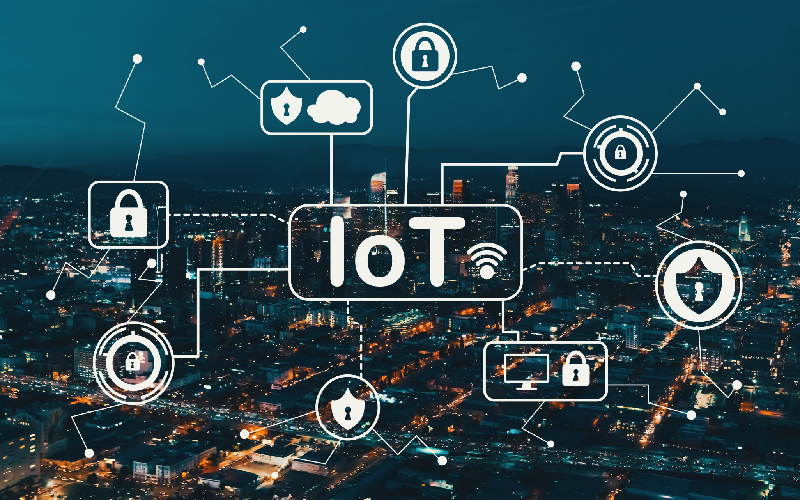
The Internet of Things (IoT) has a complex structure with various layers to perform data collection, transmission, storage, and processing. An IoT system typically includes the following basic components:
The device layer is the initial and critical layer in an IoT system, where data is collected from the real environment. It determines the quality and accuracy of the data used for analysis and decision-making. Key components in this layer typically include:
Sensors measure environmental factors and convert them into signals or digital data that the system can process. Common types of sensors include:
Controllers process data collected from sensors, make decisions, and control actuators. Examples include:
These devices perform physical or mechanical actions based on instructions from the controller, converting control signals from the system into real-world actions. Common types include:
Using IoT, Big Data, and Artificial Intelligence (AI), IoT serves as a cornerstone in smart cities to improve residents' quality of life and city operational efficiency.
Smart Traffic Lights: Adjust signal timings based on real-time traffic flow on each route, reducing waiting times and preventing congestion at intersections, especially during peak hours. These systems also save energy by dimming lights when no vehicles are present.
Traffic Monitoring Systems: Installed at traffic junctions or along roads to monitor traffic conditions, providing data for route optimization.
Real-Time Traffic Updates: Mobile apps and smart maps give drivers real-time traffic information, helping them choose optimal routes and avoid congestion.
IoT-enabled parking systems guide drivers to available spaces and reduce the time spent searching, easing congestion in busy urban areas.
A notable example is the VNPT Smart Lighting Solution, which adjusts brightness based on environmental conditions and actual demand, saving up to 70% in energy costs.
IoT digitizes and automates various public services, improving service efficiency for citizens. Intelligent Operation Centers (IOC), deployed by VNPT in 40 provinces, play a critical role in urban service management and coordination.
The combination of AI and IoT creates unprecedented smart urban management systems. Advanced AI algorithms process massive IoT sensor data, delivering accurate analyses and forecasts for various urban aspects.
The proliferation of 5G networks unlocks new possibilities for urban IoT systems. With ultra-fast data speeds and minimal latency, 5G supports applications requiring instant responses, such as autonomous vehicles and emergency response systems.
As IoT evolves, advanced security solutions like blockchain and sophisticated encryption are increasingly integrated. These technologies protect both citizen data and urban management systems.
Despite IoT's immense benefits, several challenges arise in its implementation. Resource allocation is a significant concern; not all cities possess the financial and technical capacity to invest in high-tech infrastructure.
Modern cities must not only develop sustainably but also adapt to climate change. IoT aids in tracking climate change impacts through environmental sensor systems. This data supports local governments in crafting policies to mitigate disaster risks and improve community resilience.
Collaboration between local authorities and private enterprises is essential for smart city development. Public-private partnership (PPP) models mobilize funds and facilitate technology and expertise sharing.
Educating citizens about technology and raising awareness of IoT and AI benefits are crucial in the smart city transition. Digital skill training programs and public campaigns highlight the advantages of new technologies, fostering cooperation between citizens and authorities.
Smart city development must align with environmental protection. Smart transportation systems, efficient waste management, and green spaces improve residents' quality of life. Urban tree planting, parks, and recreational areas reduce air pollution and offer spaces for relaxation and rejuvenation.
Renewable energy solutions like solar and wind power contribute to sustainable urban energy supply, reducing dependence on finite natural resources.
Other news

Signify and KPS sign strategic partnership agreement.
Signify and KPS have signed a strategic partnership to promote smart, energy-efficient lighting solutions for buildings in Vietnam.
View detail

From APEC 2017 Da Nang to APEC 2027 Phu Quoc: From traditional security solutions to smart IOCs.
From APEC 2017 security monitoring solutions to a smart IOC model for APEC 2027 in Phu Quoc.
View detail

Team Building KPS 2026 | Da Nang - Hoi An - Hue
KPS 2026 Team Building journey in Da Nang - Hoi An - Hue, where teams bond, recharge, and spread sustainable values.
View detail

Optimizing air conditioning based on room conditions in hotels and resorts.
Why do 20-30% of hotel rooms still have their air conditioning running even when there are no guests?
View detail

Energy-saving solutions for hotels and resorts - without compromising the experience.
Consulting and implementing EMS systems for hotels - reducing electricity costs, smarter operation - without compromising customer experience.
View detail

Energy Management System (EMS): Cost and Operation Optimization
EMS solutions help businesses monitor, analyze, and optimize energy in real time, saving 10-30% on electricity costs.
View detail
ABOUT KPS


Regulations and policies
Warranty and return policy Delivery, payment, and feedback Giấy phép kinh doanhContact Information
HO CHI MINH OFFICE
10–12 Dong Van Cong Street, Cat Lai Ward, Ho Chi Minh City.
+842839976099 / 903 709 019
info@kps.com.vn
www.kps.com.vn
Work time
Monday – Friday : 8:00 AM - 17:30 PM
Saturday - Sunday: Off
HA NOI OFFICE
22 Alley 168 Nguyen Xien, Khuong Dinh Ward, Hanoi City
+84 903 709 019
kpshn@kps.com.vn
www.kps.com.vn
Work time
Monday – Friday: 8:00 AM - 17:30 PM
Saturday - Sunday: Off
DA NANG OFFICE
490 Nguyen Tri Phuong, Hoa Cuong Ward, Da Nang City
+84 903 709 019
kpsdn@kps.com.vn
www.kps.com.vn
Work time
Monday – Friday: 8:00 AM - 17:30 PM
Saturday - Sunday: Off
CAN THO OFFICE
11/11 Tran Binh Trong, Ninh Kieu Ward, Ninh Kieu District, Can Tho City.
+84 090 709 019
kpsct@kps.com.vn
www.kps.com.vn
Work time
Monday – Friday: 8:00 AM - 17:30 PM
Saturday - Sunday: Off
SERVICE CENTER - WAREHOUSE
10–12 Dong Van Cong Street, Cat Lai Ward, Ho Chi Minh City.
+ 84 28 3997 0609
baohanh@kps.com.vn
www.kps.com.vn
Work time
Monday – Friday: 8:00 AM - 17:30 PM
Saturday - Sunday: Off
2010 © Bản quyền thuộc KPS
Online: 44 | Visitors Counter: 17747180
About | Recruitment | News | Contact Us


