


info@kps.com.vn
+84 903 709 019
In the hospitality industry, there is a very clear paradox:
You must reduce operating costs, but you cannot compromise guest experience.
Guests may not notice how much you save on electricity. But they will immediately notice if:
→ That is why many hotels choose to “burn money on electricity” to maintain guest experience.
But in reality, an Energy Management System (EMS) can help hotels reduce 15-30% of energy costs without guests noticing any difference.
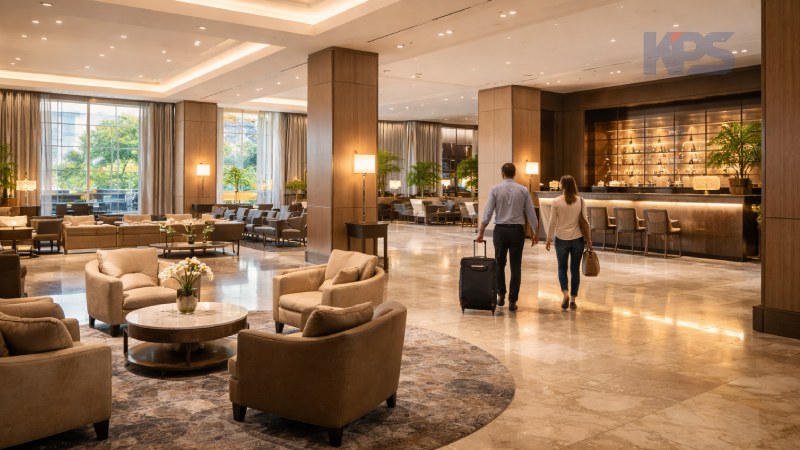
Instead of reducing power based on fixed settings, EMS optimizes based on real operational data.
Most hotels today use key cards to control electricity in guest rooms. However, in reality:
→ Leading to significant energy waste that the system cannot control.
EMS solves this by:
→ See detailed case study: Why key cards are no longer effective in hotels?
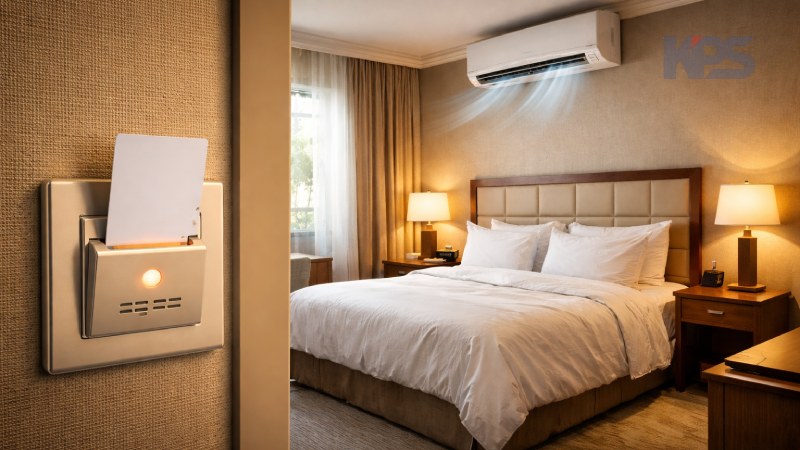
In practice, many HVAC systems still operate on fixed schedules, not reflecting actual demand. This leads to overcapacity operation and high energy consumption without proportional efficiency.
EMS addresses this by collecting and analyzing real-time operational data (cooling load, energy consumption, equipment performance...), thereby optimizing HVAC operation.
Instead of running at 100% capacity, the system will:
→ Reduce 15-25% HVAC energy consumption while maintaining stable temperature conditions.
In many hotels, electricity costs are not only based on total consumption but are also heavily affected by peak demand.
Just a few moments of sudden load spikes (e.g., multiple systems starting simultaneously) can significantly increase electricity costs for the entire billing cycle.
EMS helps by:
→ This allows significant cost reduction without affecting guest experience.
→ See detailed article: How EMS controls peak demand in practice
In hotels, the largest energy waste does not come from obvious faults, but from systems operating “correctly” but not according to actual demand.
Air conditioning runs in empty rooms. Technical systems maintain stable loads unnecessarily. Energy is “leaking” in ways that are invisible to the naked eye.
EMS does more than measure consumption — it identifies actual operational states and detects invisible inefficiencies that increase daily costs.
→ The issue is not the equipment, but that the system does not know when to reduce.
Public areas and back-of-house (BOH) are often considered “fixed zones,” so operations are also fixed:
But in reality, demand fluctuates constantly based on guest flow and time.
EMS changes this approach by turning overlooked areas into major energy-saving opportunities:
And often, the biggest savings come from the areas no one expected to optimize.
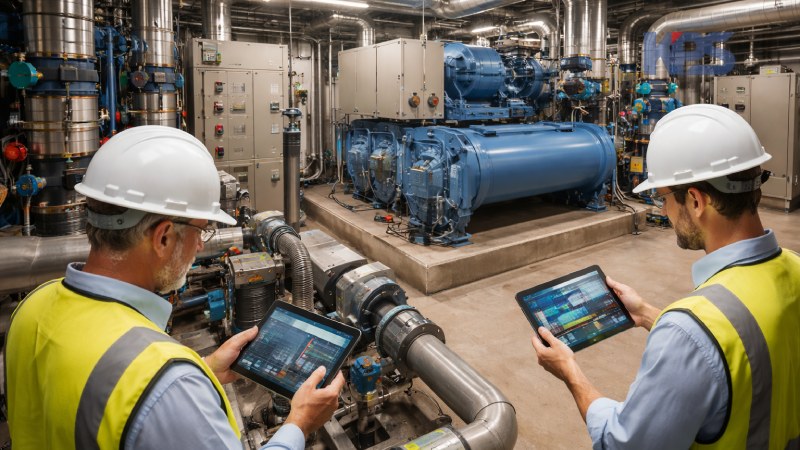
Hotels always face a difficult challenge: reducing costs without impacting guest comfort.
Even small changes can affect experience:
So how can hotels save energy without affecting guest experience?
In energy optimization, deploying systems separately is no longer enough to achieve sustainable efficiency.
What businesses truly need is an integrated solution where:
→ All on a unified platform
That is also KPS’s approach: Not just saving energy, but optimizing how energy is used across the entire building.
Instead of separating systems, KPS builds a unified architecture:
→ Transforming from fragmented monitoring to data-driven optimization
KPS implements solutions based on open platforms from leading brands:
At the same time, KPS is a distributor and integrator of multiple systems:
→ Enabling multi-system, multi-brand integration without vendor lock-in
→ Suitable for both new projects and system upgrades
With over 16 years of development, KPS has delivered more than 800 projects nationwide:
KPS does not stop at implementation, but supports throughout the lifecycle:
If you are looking to reduce energy costs but don’t know where to start:
Contact KPS for a tailored solution based on your building.

Other news

Signify and KPS sign strategic partnership agreement.
Signify and KPS have signed a strategic partnership to promote smart, energy-efficient lighting solutions for buildings in Vietnam.
View detail

From APEC 2017 Da Nang to APEC 2027 Phu Quoc: From traditional security solutions to smart IOCs.
From APEC 2017 security monitoring solutions to a smart IOC model for APEC 2027 in Phu Quoc.
View detail

Team Building KPS 2026 | Da Nang - Hoi An - Hue
KPS 2026 Team Building journey in Da Nang - Hoi An - Hue, where teams bond, recharge, and spread sustainable values.
View detail

Optimizing air conditioning based on room conditions in hotels and resorts.
Why do 20-30% of hotel rooms still have their air conditioning running even when there are no guests?
View detail

Energy Management System (EMS): Cost and Operation Optimization
EMS solutions help businesses monitor, analyze, and optimize energy in real time, saving 10-30% on electricity costs.
View detail
ABOUT KPS


Regulations and policies
Warranty and return policy Delivery, payment, and feedback Giấy phép kinh doanhContact Information
HO CHI MINH OFFICE
10–12 Dong Van Cong Street, Cat Lai Ward, Ho Chi Minh City.
+842839976099 / 903 709 019
info@kps.com.vn
www.kps.com.vn
Work time
Monday – Friday : 8:00 AM - 17:30 PM
Saturday - Sunday: Off
HA NOI OFFICE
22 Alley 168 Nguyen Xien, Khuong Dinh Ward, Hanoi City
+84 903 709 019
kpshn@kps.com.vn
www.kps.com.vn
Work time
Monday – Friday: 8:00 AM - 17:30 PM
Saturday - Sunday: Off
DA NANG OFFICE
490 Nguyen Tri Phuong, Hoa Cuong Ward, Da Nang City
+84 903 709 019
kpsdn@kps.com.vn
www.kps.com.vn
Work time
Monday – Friday: 8:00 AM - 17:30 PM
Saturday - Sunday: Off
CAN THO OFFICE
11/11 Tran Binh Trong, Ninh Kieu Ward, Ninh Kieu District, Can Tho City.
+84 090 709 019
kpsct@kps.com.vn
www.kps.com.vn
Work time
Monday – Friday: 8:00 AM - 17:30 PM
Saturday - Sunday: Off
SERVICE CENTER - WAREHOUSE
10–12 Dong Van Cong Street, Cat Lai Ward, Ho Chi Minh City.
+ 84 28 3997 0609
baohanh@kps.com.vn
www.kps.com.vn
Work time
Monday – Friday: 8:00 AM - 17:30 PM
Saturday - Sunday: Off
2010 © Bản quyền thuộc KPS
Online: 42 | Visitors Counter: 18097258
About | Recruitment | News | Contact Us


