


info@kps.com.vn
+84 903 709 019
Specialized housing – a silent but extremely important shield that helps your camera system withstand sea winds, salt and harsh weather. So how to choose the right housing? Let's find out with KPS in the article below!
A dedicated housing is an outer protective shell specially designed to enclose and protect surveillance cameras in harsh environments such as coastal areas, seaports, chemical plants, dusty or corrosive areas.
Role:
To ensure optimal protection, specialized housings are often made from high-quality materials such as:
To better understand the types of cameras that have been designed with a specialized anti-corrosion shell - no need for a separate housing, you can refer to the article: Cameras with anti-corrosion shells.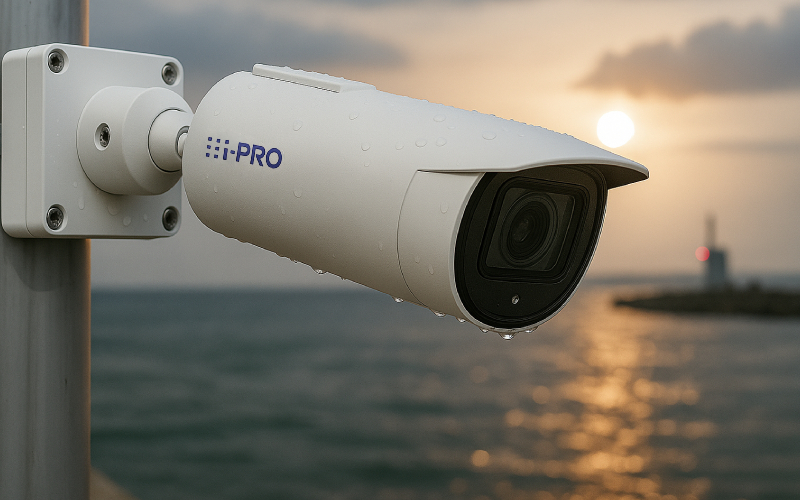
Anti-corrosion is the ability of the device to resist oxidation or chemical reactions with salt vapor, salt water, high humidity in the air.
In a marine environment, where the air contains a lot of salt vapor and the humidity is always high, metal corrosion occurs many times faster than in an inland environment. Therefore, corrosion resistance is a mandatory criterion when choosing outdoor surveillance cameras in areas such as:
When installing cameras in coastal areas or harsh environments, not only corrosion resistance is required but also international protection standards must be ensured. These standards are not just technical numbers - but a commitment to the durability, resistance and operational safety of the camera in real conditions.
Some common international protection standards include: NEMA 4X, IP66 / IP67, IK10.
In coastal environments where high humidity, salt spray and rain are frequent threats to electronic equipment, a fully sealed specialized housing system will be the optimal "shield" to protect surveillance cameras. This design helps to completely prevent the penetration of rainwater, salt mist, dust and moisture - factors that can easily cause short circuits, fog up glass, corrode components and reduce camera life.
With sealed joints, high-quality rubber gaskets and an intelligent moisture drainage system, the housing not only keeps the interior space dry but also maintains stable operating performance, ensuring sharp images regardless of harsh weather conditions.
Housing specialized for marine environments needs to be designed to be perfectly compatible with the type of camera used (Dome, Bullet, PTZ...) as well as the specific installation purpose.
For example, with outdoor PTZ cameras monitoring large areas such as container ports or docks, the housing needs to support flexible movement, not obstruct the scanning angle, and have a built-in cooling, heating or automatic wiper system.
With fixed cameras monitoring entrances and warehouses near the sea, the housing only needs to ensure absolute tightness, corrosion resistance and good heat dissipation. The compatibility between the housing and the device not only ensures aesthetics and performance but also avoids damage due to incorrect or unsynchronized installation - especially important in harsh marine environments.
In harsh weather conditions and high humidity along the coast, the housing must be able to dissipate heat quickly, avoiding overheating and reducing the life of internal components. Many current housing models use aluminum alloy or stainless steel coated with electrostatic paint, combined with active or passive heat dissipation design to maintain stable temperature.
In addition, the lens cover must be made of scratch-resistant, high-transmittance materials such as polycarbonate or tempered glass with anti-fog, anti-water coating. This helps ensure that image quality is not affected by salt spray, seawater, dirt or UV rays, and also supports AI camera lines that require high definition to analyze objects.
Housing dedicated for outdoor cameras, especially in marine environments, needs to be designed for easy maintenance and installation, to save time, costs and ensure continuous system operation.
A good housing will have a quick-open design, using a convenient hinge or locking mechanism, allowing technicians to easily disassemble when cleaning, checking or replacing internal components. In addition, signal cables and power sources should also be neatly arranged with waterproof edges, gaskets
Sealed rubber tank, helps reduce the risk of water seepage during operation.
Regarding installation, the housing should support many mounting options such as pillar mounting, wall mounting, ceiling mounting or extension arm mounting - adapting to areas such as container yards, entrance gates, cranes, or monitoring posts at seaports. Housing models with the ability to rotate angles and adjust directions flexibly help optimize the viewing range without having to change the camera position.
The "easy maintenance and installation" feature is a factor that helps the surveillance system always be ready, minimizing downtime - which is extremely important in areas with strict security requirements such as seaports.
›› If you are looking for an effective surveillance solution for coastal environments, choosing the right type of camera is key. To better understand the factors to consider, you can refer to the article 5 criteria for choosing cameras for coastal areas, helping you choose equipment that is both durable and ensures long-term performance in harsh conditions.
When protected by a standard housing layer (anti-corrosion, watertight, impact resistant), the camera will:
Instead of having to regularly clean, repair or replace cameras due to corrosion, salt vapor, or weather effects, specialized housing will provide comprehensive protection for the device. Thanks to that:
When the camera is covered by a sealed, waterproof and anti-corrosion shell:
Increasing safety and security is one of the most important benefits when using a specialized housing for cameras in coastal areas or harsh environments. Housing acts as a "physical shield" to help:
The housing is designed to be easy to disassemble and assemble, helping to:
Instead of having to replace the entire equipment after a short period of time due to corrosion, water infiltration or weather damage, the initial investment in a standard housing will help:
i-PRO WV-U31301-F2L + Outdoor Housing
Notes when choosing housing or camera:
With over 15 years of experience in distributing security solutions, surveillance and low voltage systems, KPS is proud to be the official distributor of i-PRO. When choosing KPS, you will not only receive genuine products, but also enjoy in-depth technical support services, comprehensive solution consulting, as well as clear and transparent after-sales policies.
KPS is committed to accompanying construction units, contractors and investors throughout the project life cycle - from consulting, equipment demo, technical support to warranty and maintenance after installation. We understand that, for projects with high requirements for durability, stability and long-term operation such as at seaports, factories, industrial parks, choosing the right equipment and the right partner is the deciding factor.

Other news

Signify and KPS sign strategic partnership agreement.
Signify and KPS have signed a strategic partnership to promote smart, energy-efficient lighting solutions for buildings in Vietnam.
View detail

From APEC 2017 Da Nang to APEC 2027 Phu Quoc: From traditional security solutions to smart IOCs.
From APEC 2017 security monitoring solutions to a smart IOC model for APEC 2027 in Phu Quoc.
View detail

Team Building KPS 2026 | Da Nang - Hoi An - Hue
KPS 2026 Team Building journey in Da Nang - Hoi An - Hue, where teams bond, recharge, and spread sustainable values.
View detail

Optimizing air conditioning based on room conditions in hotels and resorts.
Why do 20-30% of hotel rooms still have their air conditioning running even when there are no guests?
View detail

Energy-saving solutions for hotels and resorts - without compromising the experience.
Consulting and implementing EMS systems for hotels - reducing electricity costs, smarter operation - without compromising customer experience.
View detail

Energy Management System (EMS): Cost and Operation Optimization
EMS solutions help businesses monitor, analyze, and optimize energy in real time, saving 10-30% on electricity costs.
View detail
ABOUT KPS


Regulations and policies
Warranty and return policy Delivery, payment, and feedback Giấy phép kinh doanhContact Information
HO CHI MINH OFFICE
10–12 Dong Van Cong Street, Cat Lai Ward, Ho Chi Minh City.
+842839976099 / 903 709 019
info@kps.com.vn
www.kps.com.vn
Work time
Monday – Friday : 8:00 AM - 17:30 PM
Saturday - Sunday: Off
HA NOI OFFICE
22 Alley 168 Nguyen Xien, Khuong Dinh Ward, Hanoi City
+84 903 709 019
kpshn@kps.com.vn
www.kps.com.vn
Work time
Monday – Friday: 8:00 AM - 17:30 PM
Saturday - Sunday: Off
DA NANG OFFICE
490 Nguyen Tri Phuong, Hoa Cuong Ward, Da Nang City
+84 903 709 019
kpsdn@kps.com.vn
www.kps.com.vn
Work time
Monday – Friday: 8:00 AM - 17:30 PM
Saturday - Sunday: Off
CAN THO OFFICE
11/11 Tran Binh Trong, Ninh Kieu Ward, Ninh Kieu District, Can Tho City.
+84 090 709 019
kpsct@kps.com.vn
www.kps.com.vn
Work time
Monday – Friday: 8:00 AM - 17:30 PM
Saturday - Sunday: Off
SERVICE CENTER - WAREHOUSE
10–12 Dong Van Cong Street, Cat Lai Ward, Ho Chi Minh City.
+ 84 28 3997 0609
baohanh@kps.com.vn
www.kps.com.vn
Work time
Monday – Friday: 8:00 AM - 17:30 PM
Saturday - Sunday: Off
2010 © Bản quyền thuộc KPS
Online: 27 | Visitors Counter: 17756833
About | Recruitment | News | Contact Us


