


info@kps.com.vn
+84 903 709 019
Installing a camera near the sea but the device quickly rusts, has a blurry image, or loses signal? Have you chosen the right type of camera for this environment?
The coastal environment is always a big challenge for outdoor electronic devices, especially surveillance camera systems. Here, salt vapor in the air often adheres to the camera surface, combined with high humidity all year round, creating ideal conditions for rapid oxidation and metal corrosion. Not only that, heavy rain and strong winds carry seawater and tiny salt particles that easily penetrate weak points on the body, causing leaks, rust, and damage to internal components.
In addition, day and night temperature fluctuations in coastal areas cause the camera to expand and contract continuously, cracking the protective paint layer or loosening the rubber gasket - opening the way for moisture and salt to penetrate. If the device is not equipped with a corrosion-resistant housing that meets NEMA 4X, IP66, IP67 standards or special coating materials, damage after a short period of time is inevitable. Therefore, to ensure long-term stable performance, using a specialized corrosion-resistant camera is an essential choice in areas such as seaports, coastal factories or resorts near the sea.
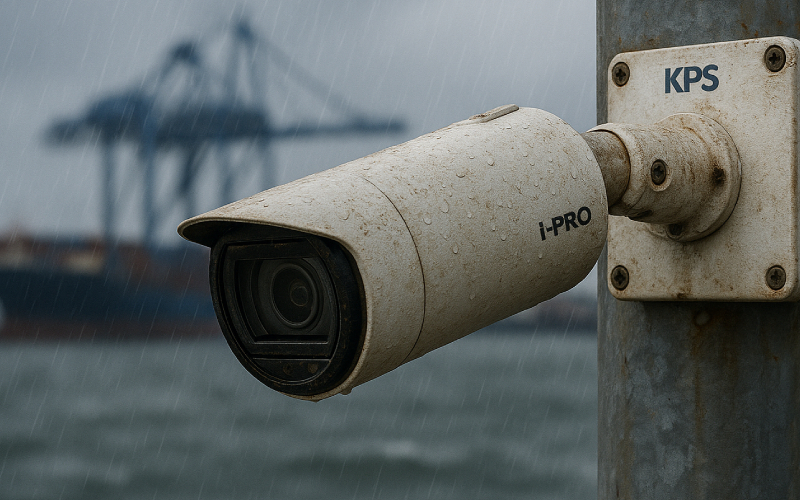
One of the most noticeable signs when the camera begins to corrode is the outer shell changing color, peeling or appearing dark stains. In coastal areas, salt vapor and high humidity not only affect the metal structure but also directly affect the protective paint layer on the outside. Initially, you can see the shell losing its shine, then peeling off in patches, revealing the oxidized metal layer underneath.
If not promptly repaired, the corrosion process will spread, causing the camera to lose its aesthetic value, reduce its internal protection, and increase the risk of component damage due to water and salt seepage. This is the reason why outdoor cameras installed on coastal areas need to be equipped with special anti-corrosion coatings, NEMA 4X standard housings, or high-quality anti-oxidation materials such as powder-coated aluminum, stainless steel, etc.
In coastal environments, the camera's screws, bases, and joints are the first places to corrode and rust. Due to frequent direct contact with salt vapor, sea breezes carrying tiny salt particles, and high humidity, small metal parts - if not treated against corrosion or made from substandard materials - will quickly turn rusty brown, black, or even rusty.
When the connection points are rusted, it not only affects the aesthetics and sturdiness of the device, but also threatens the safety of the installation: the camera can become loose and fall when there is strong wind or strong vibration. In addition, widespread rust can also affect the internal circuit if rainwater seeps through these joints.
A worrying sign that the camera is being affected by the coastal environment is the lens cover glass is cloudy, has water stains or condensation inside. This phenomenon occurs when the outer protective layer is no longer completely sealed, allowing moisture and salt vapor to penetrate through gaps, aging rubber gaskets, or damage from long-term corrosion of joints.
Condensation inside reduces image quality, causing the captured image to be blurry, blurred or unclear in low light conditions, especially at night when the camera uses infrared. More seriously, high humidity accumulated inside for a long time will oxidize electronic circuit boards, causing damage to sensors, short circuits or reducing the life of the device.
One of the serious consequences of using substandard cameras in coastal areas is that the camera operates unstable, the image is jerky, intermittent or completely loses signal. This is the result of corrosion of electrodes, circuit boards and internal contact points, when salt vapor and humidity penetrate the body of the camera through gaps, vents or unsealed installation locations.
Salt vapor in the air is a conductive agent, when it penetrates inside it will create a slight short circuit, interrupting signal transmission or causing interference. Over time, electronic components are oxidized, causing the camera to be unable to connect to the central system or display images full of errors, discoloration, and flickering.
When the camera image appears blurry, unsharp, grainy or color-shifting, this is an early sign that the device has been affected by corrosive elements or moisture intrusion from the outside environment.
In coastal areas, salt vapor and high humidity can seep through small gaps in the camera housing, fogging the protective glass, staining the lens or causing condensation inside the lens. In addition, corrosion of the contact points or image signal processing circuit boards can also cause color noise, tone distortion or light bleed.
To effectively deal with signs of corrosion such as peeling housings, rusty components, cloudy lenses, intermittent signals or noisy images - choosing the right camera from the start is key. Prioritize camera lines specialized for coastal environments, with NEMA 4X corrosion-resistant housings, water and dust resistance (IP66/IP67) and impact resistance (IK10). At the same time, it is recommended to combine stainless accessories, anti-oxidation coatings, water-tight signal protection boxes and specialized protective housings if needed.
Refer to the article: Criteria for choosing cameras for marine environments
In addition, to ensure the device operates stably for a long time, periodic maintenance, checking the tightness of the joints, cleaning the camera lens, and promptly replacing damaged components are indispensable.
WV-S85402-V2L (Multisensor AI)
With more than 15 years of experience in the field of distributing security solutions, surveillance and low-voltage electrical systems, KPS is proud to be an i-PRO distributor. When choosing KPS, you not only receive genuine products, but also enjoy in-depth technical support services, comprehensive solution consulting, as well as clear and transparent after-sales policies.
KPS is committed to accompanying construction units, contractors and investors throughout the project life cycle - from consulting, equipment demo, technical support to warranty and maintenance after installation. We understand that, for projects with high requirements for durability, stability and long-term operation such as at seaports, factories, industrial parks, choosing the right equipment and the right partner is the deciding factor.

Other news

Signify and KPS sign strategic partnership agreement.
Signify and KPS have signed a strategic partnership to promote smart, energy-efficient lighting solutions for buildings in Vietnam.
View detail

From APEC 2017 Da Nang to APEC 2027 Phu Quoc: From traditional security solutions to smart IOCs.
From APEC 2017 security monitoring solutions to a smart IOC model for APEC 2027 in Phu Quoc.
View detail

Team Building KPS 2026 | Da Nang - Hoi An - Hue
KPS 2026 Team Building journey in Da Nang - Hoi An - Hue, where teams bond, recharge, and spread sustainable values.
View detail

Optimizing air conditioning based on room conditions in hotels and resorts.
Why do 20-30% of hotel rooms still have their air conditioning running even when there are no guests?
View detail

Energy-saving solutions for hotels and resorts - without compromising the experience.
Consulting and implementing EMS systems for hotels - reducing electricity costs, smarter operation - without compromising customer experience.
View detail

Energy Management System (EMS): Cost and Operation Optimization
EMS solutions help businesses monitor, analyze, and optimize energy in real time, saving 10-30% on electricity costs.
View detail
ABOUT KPS


Regulations and policies
Warranty and return policy Delivery, payment, and feedback Giấy phép kinh doanhContact Information
HO CHI MINH OFFICE
10–12 Dong Van Cong Street, Cat Lai Ward, Ho Chi Minh City.
+842839976099 / 903 709 019
info@kps.com.vn
www.kps.com.vn
Work time
Monday – Friday : 8:00 AM - 17:30 PM
Saturday - Sunday: Off
HA NOI OFFICE
22 Alley 168 Nguyen Xien, Khuong Dinh Ward, Hanoi City
+84 903 709 019
kpshn@kps.com.vn
www.kps.com.vn
Work time
Monday – Friday: 8:00 AM - 17:30 PM
Saturday - Sunday: Off
DA NANG OFFICE
490 Nguyen Tri Phuong, Hoa Cuong Ward, Da Nang City
+84 903 709 019
kpsdn@kps.com.vn
www.kps.com.vn
Work time
Monday – Friday: 8:00 AM - 17:30 PM
Saturday - Sunday: Off
CAN THO OFFICE
11/11 Tran Binh Trong, Ninh Kieu Ward, Ninh Kieu District, Can Tho City.
+84 090 709 019
kpsct@kps.com.vn
www.kps.com.vn
Work time
Monday – Friday: 8:00 AM - 17:30 PM
Saturday - Sunday: Off
SERVICE CENTER - WAREHOUSE
10–12 Dong Van Cong Street, Cat Lai Ward, Ho Chi Minh City.
+ 84 28 3997 0609
baohanh@kps.com.vn
www.kps.com.vn
Work time
Monday – Friday: 8:00 AM - 17:30 PM
Saturday - Sunday: Off
2010 © Bản quyền thuộc KPS
Online: 28 | Visitors Counter: 17308016
About | Recruitment | News | Contact Us


